CONTACT US

We want to hear from you; get in touch by leaving a comment on one of our posts or by using the contact me button.
Showing posts with label Portugal. Show all posts

Sunday, 28 March 2010

Your custard pie, I declare, it's sweet and nice


We feel a little gloomy to be leaving Portugal; we have enjoyed our six weeks exploring this country on the edge of Europe. We bought our last Pastel de Nata, the extremely tasty Portuguese custard tarts, got lost in the last Portuguese town devoid of signs and stayed at our last cheap Portuguese campsite.

At home it is fairly easy to be vegan-ish, but travelling in Europe we have indulged in dairy products on a number of occasions. Our blog readers may have noticed; (and comments have been made) we are food-obsessed vegetarians and so we often feel we miss out on getting a real taste for a country; in Portugal we have missed out on the delights of Salt Cod and the many smoked meats, so to also not get a chance to at least try the many different cheeses and the fantastic Portuguese cakes, including Pastel de Nata, is more than we can manage. We will revert to our old regime when we return.

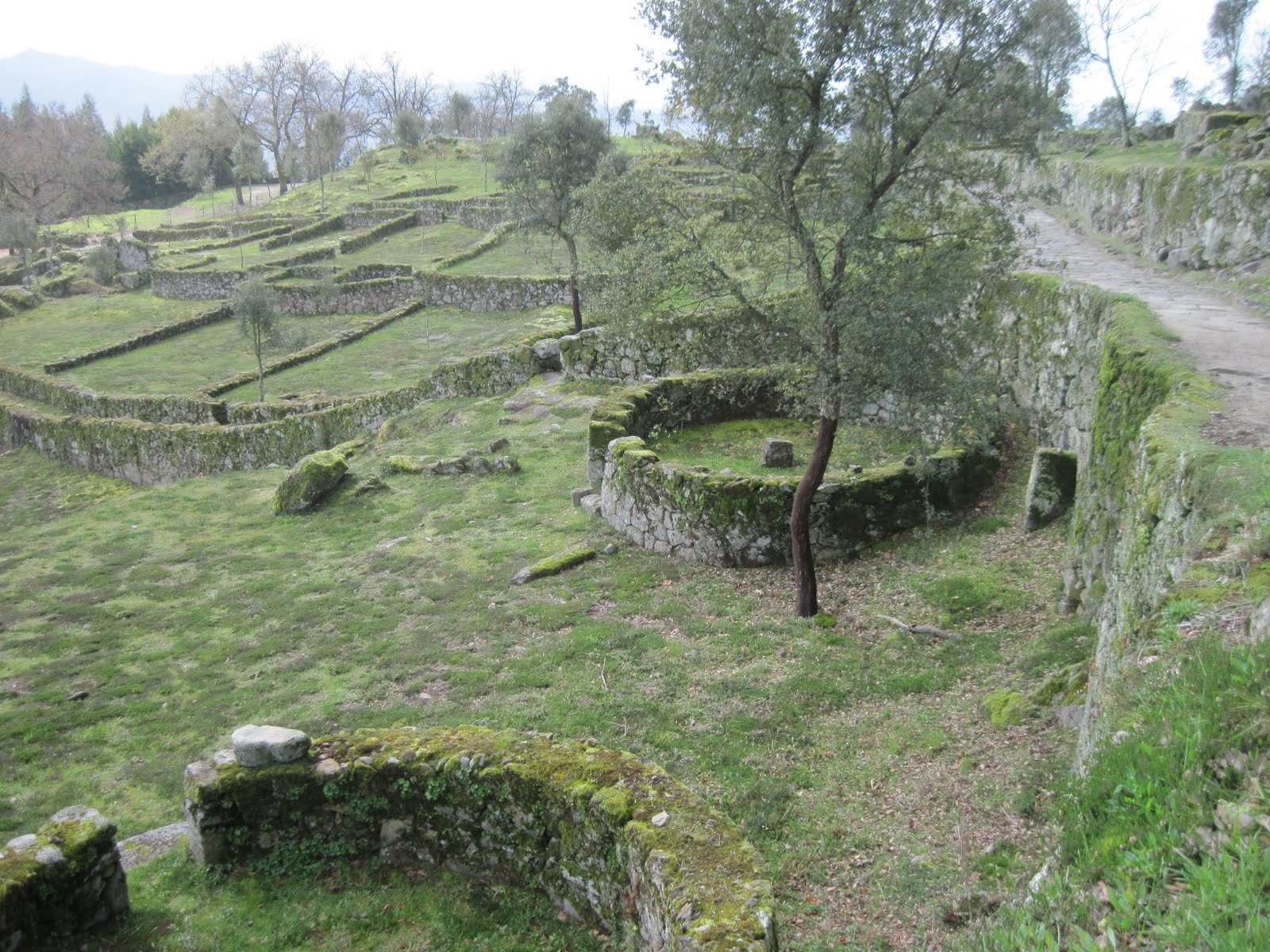
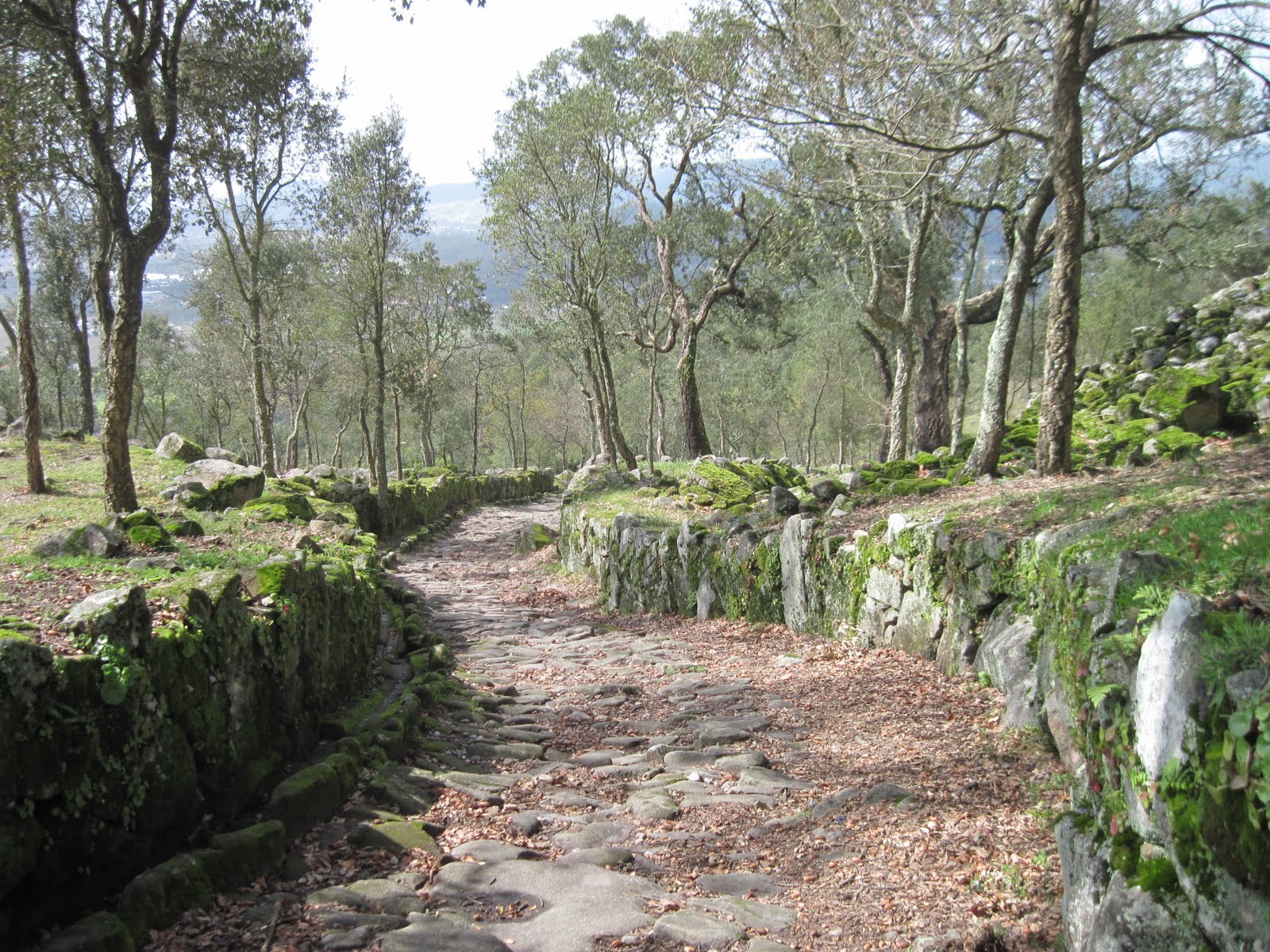
Our last sight-seeing trip in Portugal was to Citania de Briteiros, south of Braga; a Celtic hill town settled between 1,000 BC and 1,000 AD. This sizeable archaeological site is an early prototype of the walled hill town and walking around its cobbled streets you get a clear sense of how the place was lived in. As well as many houses and a series of enclosing walls, Citania de Briteiros has a pre-Roman bath house and a large building which experts think is where the men of the village gathered to chat and make decisions; just as we see them gathered today putting the world to rights in the village cafes.

Wednesday, 24 March 2010

With a little help from (our) friends


As we have mentioned previously, Anthony’s ex-colleagues at the University of Central Lancashire kindly gave him a wad of euros as a leaving gift which we have been spending over the past 11 months; treating ourselves to a meal out every month or so. In Porto, we had our ninth and last meal out on the staff and it was a memorable one.

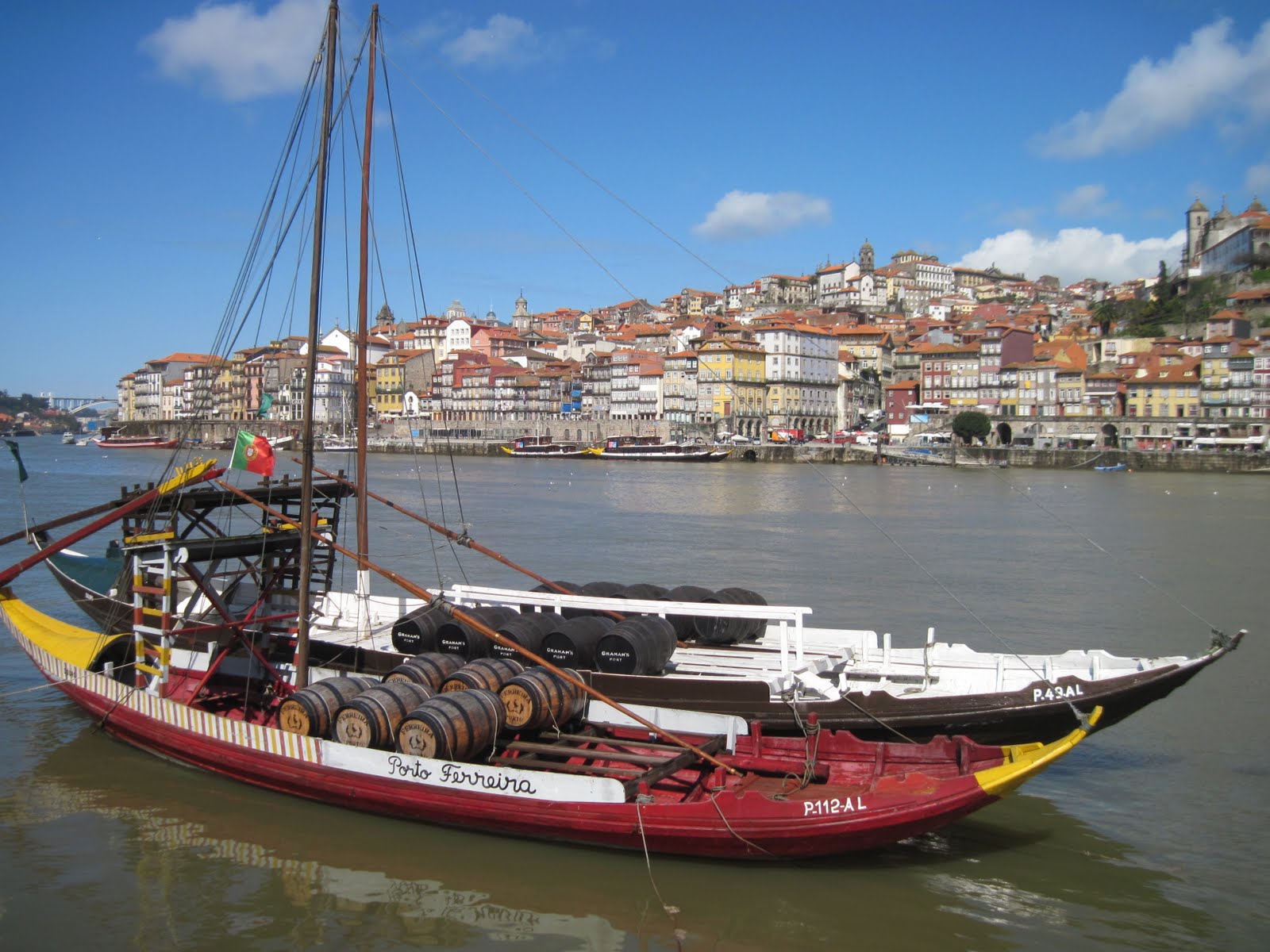
Porto is a magnificent city; set on the sunny, south facing steep banks of the River Douro, it cannot help but be picturesque. On the cooler, north facing bank is a separate city, Vila Nova de Gaia; joined by some spectacular bridges, the two have a Newcastle: Gateshead relationship. Vila Nova de Gaia is the city where all the Port wine is produced by one of the many caves or cellars; Porto just got the name.

Porto is the more picturesque of the two cities, with tall, colourful houses around narrow cobbled streets; it is best seen from Vila Nova de Gaia, or from a boat cruise on the Douro. We chose Taylor’s for our Port wine tour and tasting as it has impressive views over the river to Porto. We arrived at lunch time and having walked up the steep hill, we were pleased to find that the restaurant menu had not just vegetarian options, but vegan main meals. The Taylor’s Restaurant is very posh; silver service from attentive waiting staff, heavy white fabric napkins and a panoramic view. It is, of course, accustomed to tourists and they didn’t bat an eye-lid at two scruffy travellers, although all the other guests were in very smart attire. We had an excellent meal and toasted the University staff with an aperitif glass of dry, white Port, called Chip Dry.

Back at the camp site we watched other campers returning from their own trips to taste the local nectar; laden with bags from Cockburn, Croft, Sandeman and others.

Tuesday, 23 March 2010

Don't make me go home


The day we get on the ferry back to the UK is getting closer; although we are not negative about coming home, the very best thing about the past year has been the freedom to do as we please, without having to go to work and it is hard to feel positive about returning to being a wage slave once more. Although we are not sure we will ever get the opportunity to have a full year travelling again, we have started to think about how our future can include long trips with the Blue Bus.

We are looking forward to seeing everyone we know back at home and stuffing our faces with crumpets, chip butties and Theakston’s Old Peculiar at our first opportunity, while reading the Guardian. However, at the moment we are getting wistful thinking about the things we will miss about camping in mainland Europe. This list includes:

Fantastic bread – only the UK is obsessed with sliced white loaves
Quiet roads and motorways with no traffic jams
Meeting new people
Sitting outside in cafes drinking good coffee and watching the world go by
Cheap and good red wine
Small, spicy green peppers
Tins of tiny green lentils
Star-gazing on camp sites
Seeing new places and exploring
Warm sun
Sleeping in the van
Having the time to bird watch, look at flowers and generally enjoy the natural environment
Sweet, juicy oranges

The photographs are from Praia de Mira, a resort that does not have a lot of charm, with the exception of the blue and white wooden church; inside this has a mixture of religious and fishing icons. The beach at Praia de Mira stretches on and on; the fishing folk were on the beach messing with nets, boats and tractors.

Saturday, 20 March 2010

Oh Man, I need TV when I got TRex


We didn’t know much about Portugal before we came; we hadn’t found a book written by an ex-pat journalist or academic who had moved here for the good life and was keen to publish his thoughts on the ups and downs of life in this country on the edge of Europe. Consequently, Portugal keeps surprising us and often enchants us.

We have found out for ourselves that the Portuguese feel that the Spanish treat them as backward neighbours, they learn French and English at school, the country does not close down for three hours for siesta and people eat at what the British would consider reasonable hours. The Portuguese tile everything and prefer to build new houses, rather than live in a rustic cottage, all supermarkets smell like fishmongers, due to the amount of salt cod on sale, every café and restaurant has a TV switched on constantly, even if you go out for a meal in the evening.

This lack of fore-knowledge also means that we find tourist sights that were not on the must-see list. The dinosaur footprints near Tomar are an amazing treat, not even covered in our Church-obsessed Rough Guide. The Sauropod footprints are the oldest in the world and the best example; there are a number of tracks of different animals and you can clearly see the prints of their large back feet and smaller front feet. We paid two Euros each for the privilege of visiting the limestone quarry where these footprints were found in 1994; visitors are trusted to walk close to the tracks without damaging them, giving you an opportunity to have a good look. To see something so rare, made 175 million years ago and found by chance is an experience we will never forget. We don’t regret by-passing Rome, but overlooking these footprints would have been to miss an awesome experience that puts the present in to context and that we will never forget.

By the fountain down the road


Water features are everywhere in Portugal; decorative fountains in the towns and in the middle of roundabouts and features to provide water to homes and industry. Facing the Atlantic, water is not as scarce as it is in much of Spain, but it is still clearly a managed resource; the newspaper has a list of reservoirs and what capacity they are at every day. These reservoirs, or Barragems, are dotted around the hilly areas of Portugal; many of these are vast lakes, spectacular country roads cross them and hug their shores and they are widely used for water sports and fishing.

In the villages you can still see water features from the time when there was no running water in people’s homes; most villages still have communal taps with tiled surrounds or village pumps, Carol is getting some exercise turning the mechanism for the pump in a village near Poco Redondo. In the fields mechanical water pumps for agriculture are disused and rusting; on walks we pass old wells with no fencing around them just waiting for someone to fall in and the remains of old water wheels can be spotted. Towns often have a large water tower, sometimes colourfully decorated; the water tower in Poco Redondo was painted pastel pink.

Evora and Serpa both had a fine aqueducts and the Convento de Cristo in Tomar, the HQ for the Knights Templar, has a 7 km long aqueduct built in the 17th Century to provide water to the Convento. This impressive monument is built high above the valley and, typically for all of main-land Europe, you can walk along it without the benefit of a hand-rail.

Wednesday, 17 March 2010

And all the roads we have to walk along are winding


There are positive and negative aspects to walking and hiking in much of southern Europe; on the positive side we are getting used to not worrying about trespassing, in most countries we have had the freedom to roam and with the hunting season now over, we no longer have to worry about being mistaken for a Wild Boar. However, it is often impossible to find a map in a suitable scale for walking and we are often reliant on way-marked paths and tracks.

We are now in the wealthier and more populated part of Portugal, north of the river Tejo and staying on an idyllic site near Tomar; we are the only campers and we can breakfast in the sun with the site's donkeys, horse and sheep, called Olivia, for company. The site owners are from the Netherlands and the UK and understand that we northern Europeans like to get out for a walk; they have produced directions for three local walks and have managed to get hold of the military maps for the area from the Geological Museum in Lisbon.

The walking is mainly on un-made roads and tracks, the routes wind through Eucalyptus plantations, Olive trees, small fields of vines and along streams, occasionally crossing tarmac roads and taking us into a village for a cafe stop. The Almond blossom is following us north and the Mimosa trees are in full bloom, underneath the Eucalyptus both pink and white heather are flowering. After the rain the streams are gushing and we enjoyed the chance to paddle across one stream to continue the route, drying our feet in the sun.

Monday, 15 March 2010

Stay out drinkin' 'till the morning comes

To celebrate Anthony’s birthday Lynn and John, with the help of two Portuguese friends, Luiz and Fernando, organised a meal out at the Italian restaurant in Castelo Branco.

We had a fun and very convivial Portuguese evening; all first meeting in Silveira and opening a few bottles of red while we waited for Fernando to drive over. Consequently we reached the restaurant already very jolly at 21.30, as other diners were leaving. At the end of the meal Luiz ordered Beirao, a popular Portuguese liqueur, and we toasted the staff, a Portuguese tradition we were told, and wished Anthony a very long life. A Tiramusu birthday cake with candles was produced and everyone sang. As we left the restaurant the staff had their coats on to go home, but our new Portuguese friends considered the night young and we were taken to the nearby Rock Café; a dark cellar full of loud rock music with young and older music fans, sitting at tables on plastic chairs, enjoying the sounds. We tumbled in to bed tired and slightly giddy in the early hours after a birthday to remember

Lots of rural charm in the country


Lynn and John live in Silveira, a hamlet on the northern banks of the River Tejo, with their beautiful cat Jagger. As well as their own house, they have two cottages they let as holiday rentals for the perfect, away-from-it-all retreat. Hopefully the photographs of the area do justice to the rural charm of this area. You can find more details and book your own trip to this beautiful part of Portugal on the Owners Direct website, property reference P6367.

Kayt and Zohra flew over from the UK to join us for a long weekend and Lynn and John were faultless hosts, taking us all for walks and trips locally; we met other villagers as they were out working in the sunshine, we spotted a Short-toed Eagle and a tiny snake, we walked through olive trees and past rushing streams, we admired the village bread ovens and covered well, we stood on a high crag above the river watching the Griffon Vultures circle below us. In the evenings we shared the cooking, drank Portuguese red wine and brandy, caught up on all the news and gossip and enjoyed plenty of laughing.

We had a day trip to Marvao, a walled hill town with charming houses and a warren of a castle perched at one end, a magnificent spot with panoramic views over fields and villages to every side. The day also provided another fantastic Portuguese café experience; Zohra and Kayt had to be dragged out of the cake shop salivating after purchasing only a small selection of the delicious, sweet Portuguese cakes.

Wednesday, 10 March 2010

If you change your mind


We know, we had said farewell to the Atlantic Ocean over a week ago; but we are travellers and as you can see, we have altered our plans and are back on the coast, chasing the warmth and sunshine. We are camped near Nazare; a tourist resort looked over by a rocky headland. With a sunny day ahead, we set off with a packed rucksack and the tourist information leaflet about a local walk. We followed the marker posts through pine woods and along the beach, enjoying stretching our legs; it all seemed very simple. However, as is the way with these things our simple walk became more exciting. The next marker post was high on the cliff, underneath which the waves were crashing. We had a go at leaping on to the rocky ledge between rolls of surf, but retreated with wet feet and looked for an alternative. This less treacherous route involved crawling through tall bamboo canes, but we made it to the top of the cliffs unscathed.

There are a number of things that indicate that Portugal is not a wealthy country; we have seen families camping in tents on the edge of towns, while on the road we passed a group of ruined huts that were lived in and resembled a shanty town, in a number of towns we have seen the communal laundry facilities still being used, the photograph is of the one in Sitio, above Navare. The notes you receive from a cash machine differs from country to country; in wealthy Austria the ATMs generally only gave out 50 Euro notes; in Portugal your money comes in a wad of 20 and 10 Euro notes.

We continue to meet so many lovely people on our trip; in Alcobaca we spent hours chatting with Gisela and Paul over coffee about places we have seen. They have managed to find a lifestyle that allows them to travel for two or three months in a year and return to work; we envy them and hope we can find employers just as flexible. We will never tire of meeting new people. That said, our next stop is Lynn and John’s lovely house in the beautiful Alto Alentejo, where friends Kayt and Zohra will also be staying and it will be so relaxing to see old friends who know who we are and where we come from.

Tuesday, 9 March 2010

I've been on the road so long my friend


With under four weeks left of our trip it is difficult to hang on to that elevated feeling we had last April as we set off with looking for adventures, with a whole year and all those places ahead of us. We try and generally succeed, to live each day as it comes, but not surprisingly occasionally thoughts of how life will be back in Salford creep in to our minds and with a place and date set for our sailing our roaming is naturally limited; it is difficult to suddenly decide to shoot off to somewhere particularly warm, for example.

Portuguese cafes are one of those small things we have delighted in and will miss. They are often elegant, but slightly shabby; designed with flair and imagination, but with an air of having not been re-decorated since the 1950s. The only place that comes close in England is the fantastic Bruciannis in Preston. The Portuguese cafes are always individual and the coffee is always cheap; it is good to be in a Costa-Mega-Bucks-free-zone; apart from Sevilla, we’ve not even seen one of those chains since Manchester.

The Monastery in Alcobaca, north of Lisbon, could have been an ABC moment, but the monumental scale of the building makes it worth a visit, if just to see the kitchens; with marble floors, high tiled walls and ceiling, a small stream cascading in to a pond providing running water, a massive central fireplace and two enormous marble tables for preparation, it would have been easy to feed the five thousand from this kitchen, never mind a few monks.

Saturday, 6 March 2010

Easy as 123


Australians often have a winning, no-nonsense way of summing up a situation; travelling around this part of Portugal, Mike and Theresa have introduced us to the ABC, Another Bloody Castle. This Portuguese-Spanish border is dotted with castles and fortified towns; they are all spectacular, but after a visiting a few you can be forgiven for deciding to skip one or two, particularly when it is raining.

Monsaraz is an exception that is not to be missed; a beautiful fortified village and castle in a lofty setting above the Barragem de Alqueva, Europe’s largest reservoir. Monsaraz is a picture-box village and provides fantastic views over the surrounding countryside. The reservoir, opened in 2002, was not surprisingly controversial as it flooded 200 prehistoric sites, millions of trees, habitats for Lynx and Eagles and a village. As is often the case, the economic arguments won over any concerns about the environment.

In Evora, we met up with Mike and Theresa again and shared ABC experiences. Evora is a UNESCO World Heritage Site with a Roman Temple, Medieval Walls, cobbled alleys and 16th Century mansions and most certainly on the tourist circuit. We did look around all these sights, but were most interested in the headgear people around here wear; for men, the flat cap is most common, while women sport versions of the pull on hat or headscarves. The hat shop in Evora was a serious shopping emporium and not for a giggling hat-trying-on-types like us, so we only gazed in through the window.

If you see a faded sign by the side of the road


Portugal is not a huge country, but travelling through the Alentejo you might be forgiven for thinking it is vast; we drove between large wheat fields and pasture for cattle, passed rows and rows of olive trees, with sheep and lambs grazing below them and extensive forests of cork oak trees, we meandered along the shores of enormous reservoirs.

In the midst of this agricultural abundance, a sign, hand-painted in white gloss on a slab of rock, announced the Serro de Bica campsite; without this we would never have found this small Dutch-run oasis which provided us with the facilities we need for a night.

Occasionally, the vast green-ness of the Alentejo is punctuated by an isolated white town or village, often with stone ramparts and a castle. We stopped in Beja for a look around the castle and splendid squares and bumped in to Mike and Theresa, the Australians last seen in Ronda and at that time on their way to Morocco. We caught up with their thoughts on motorhoming in Morocco and continued on to Serpa, a little gem of a town.

The campsite in Serpa is a municipal site and they warned us there was a strike of municipal workers the next day; we could stay at the site, but the Blue Bus would not be able to leave, as the gates would remain locked. Fortunately, we could come and go as pedestrians and we strolled in to the fantastic walled town of Serpa. The castle, museums, swimming pool and municipal park were all closed, due to the strike, but there was still plenty to enjoy. The narrow cobbled streets of the old town are very picturesque; lined with white, single-storey buildings, ranging from total decay to gentrified cottages, all with large and decorative chimney pots, cats made their way from place to place over the red-tiled rooftops or were curled up on a sunny wall, pots of geraniums and lines of washing provided colour in the streets.

There were not many other tourists around, but at one of the town wall’s gates who should we meet up with again, but Mike and Theresa! We drank coffee and put the world to rights for a while, sending them on their way with our battered old camera, as theirs had broken and some DVDs we have watched. We expect to meet them again.

Tuesday, 2 March 2010

I planned each chartered course, each careful step along the byway


We like to see a country that builds public buildings that look attractive, rather than drab, and Portuguese primary schools are a lovely example. Most of the ones we have seen follow the same style; a curved red tiled roof and Romanesque arched doorways at each end of the building. They are so picturesque and look like a school you would only find in Trumpton.

Houses in Portugal follow the white with blue highlights pattern and are often single storey. The pleasant open square in Porto Covo da Bandiera is a pretty example of this local style. This pretty coastal village does not get a mention in the Rough Guide; but then although the Alentejo area makes up about third of the whole of country of Portugal, it only merits 50 pages in the Rough Guide, clearly an area with few notable churches, hurrah! This lack of ‘sights’ to see means we make our own route and discover places for ourselves, which is no bad thing.

We are entertained by Portuguese business names; a bank called Banco Espirito Santo and a supermarket in Praia da Luz called Baptista, with billboard adverts of tomatoes under-going full immersion baptism. We wondered, is Portugal such a Catholic country it brings religion into commerce? However, our research reveals that these seemingly holy names derive from Portuguese family names, rather than national piety.

On a fantastic craggy beach near Porto Covo da Bandiera we had our last paddle in the Atlantic before we left the coast for inland Portugal. Ours were the first footsteps on the beach since the tide had scrubbed it clean, as we left the waves were rushing in and would soon wipe away any evidence of our excursion. If things go according to plan, the next coastal area we see will be on the Bay of Biscay.

She's been living in her white bread world


We are in no position to laugh at people’s difficulties with a foreign language; we have travelled three months in Spain with little language and in times of stress any one of the six languages we have used over the past ten months may emerge. That said, we do like to have a bit of a giggle over some of the translations into English we have seen.

Campsite toilet facilities are often a good place to find these mis-translations; ‘Please not to place the roles in the WC’, is not correct, but we all know what they mean. ‘The breach will be a lack of serious motive’, is less self-explanatory.

The rules and regulations for campsites are another opportunity for making less sense than you intended; ‘The campsite reserves the right of rectifying the material registered always when detect in-corrections in your registration,’ still has us baffled, we may or may not have breached that one, with or without a serious motive.

In Portugal we bought bread called Pao da Sogra. This seemed to be translated into English on the wrapping with the words ‘bread of the mother in paw’ and went on, ‘stew in oven of firewood’. Was this a cooking instruction, or a description of how it was made? All that is clear to us is that the bread in Portugal is fantastic and we’ve no idea how we will cope with Warburtons White Sliced when we return.

Monday, 1 March 2010

And we're changing our ways, taking different roads


Reluctantly we left the comforts of the fantastic campsite at Praia de Luz and set off to explore Portugal beyond the popular Algarve coast. North of the Algarve is the Alentejo, a largely rural agricultural area of Portugal, between the coastal strip and the Tejo river; this is one of the poorest areas of Europe. We were keen to learn more about this area and see what it has to offer the visitor over the next week or so.

We have found that most of the roads in southern Europe are fairly quiet, even the motorways; we haven't seen anything resembling Spaghetti Junction for ten months and Cordoba was our last experience of a traffic jam; even there, if Spanish road signs had taken us around the city, rather than leaving us to drive by compass to find the campsite, we would have had a jam-free day. We don't really know how we will adjust to the hustle of UK roads when we return. The roads to Vila Nova De Milfontes were typically quiet, with no pressure to drive at anyone's pace but our own.

Walking on the cliffs of the Atlantic coast we were among a wealth of flowers; pink thrift and rock roses are flowering and delicate sand crocuses are scattered. The landscape is green and verdant after all the rain and seeing these flowers in England, you would think it was May. Immediately inland from the coastal dunes and cliffs the fields are cultivated; the photograph shows a field of chamomile, with the ubiquitous Bermuda Buttercups in front of two highly desirable, to romantics like us, cottages. The smell of chamomile with a hint of salty sea spray; you felt relaxed and full of energy all at the same time.

The showery weather makes it feel like a warm April in England and can make it difficult to get clothes dried some days and so our standards have been slipping even further. We are currently in competition to see who can wear a pair of socks the longest number of days between washes, before the socks get up and walk away by themselves.

Sunday, 28 February 2010

You don't need a weather man to know which way the wind blows


The Romans saw the sunset at Cabo de Sao Vicente and thought the sun was sliding hissing into the sea every evening; it is also within the Parque Natural do Sudoeste Atlentejano so we thought it was worth a visit, despite the forecast for strong winds.

We caught the bus to Sagres and set off along the dramatic coastline. The wind was so strong we held hands for safety, rather than affection, as we were buffeted along the cliffs to the inevitable lighthouse at the end. In the fresh air your nose wanted to run, but the wind blew everything back in to your throat, apologies if this is too graphic for some of you. It was certainly weather you could feel and there was no question, this is real, as Sam Tyler would say (yes we’ve been re-watching ‘Life on Mars’).

We came upon a group of four empty cars parked haphazardly by the cliffs and no sign of the occupants; Anthony speculated it was the scene of a drugs-war shoot out as we’d watched ‘No Country for Old Men’ the evening before. Carol pointed out that drug dealers rarely travel around in an old Renault Four. When we reached the cars we spotted their occupants half-way down the cliffs; they had climbed down with ropes and were participating in extreme fishing.

We missed the bus back to the campsite and the prospect of two and a half hours to wait until the next in such an exposed spot saw us enquiring about taxis. A cheerful taxi driver in a camel coloured driving coat gave us a ride and gave a commentary about the weather, other drivers and the traffic lights in Portu-English while we nodded and watched the road for him.

Wednesday, 24 February 2010

And the sweet silver song of the Lark


The campsite near to Luz is quite a gem; all you blog readers at home may not be able to appreciate how uncomfortable it can be showering in an un-heated shower block every day. In southern Europe heating is generally considered un-necessary; this means that even if the shower is piping hot (and it often isn’t) as soon as you switch it off you are in a race to get dried and dressed, as you quickly cool down. Many shower blocks don’t even have external doors, providing very fresh air while you hurriedly dry. Although it is warmer than the UK, some heating is appreciated and in Luz there is one shower block that is warm, clean and so comfortable we really don’t want to leave, but we are now aware that time is running out and we want to explore more of Portugal.

This part of the Algarve is beautiful; Luz is a charming small town; with a few shops, including a large health food shop, cobbled streets, small apartments to rent, a sweep of sand, a promenade lined with palm trees and restaurants and cafes. It feels relaxed and we could easily spend a long time here. We walked the well-used path to Burgau and back, along the craggy coast, accompanied by sunshine, bird song and the sounds of the sea; Larks, Blackbirds, Kestrels, Turnstones, Sardinian Warblers and Curlew were all spotted. The bright yellow Bermuda Buttercups are everywhere and provide some colour. They are neither from Bermuda, nor a buttercup, but are a well adapted invader from Africa.

The shower block next to our pitch is open to the elements; this suits the swallows who consider it an ideal nesting site. You can use the facilities and watch the birds building their nest at the same time.

Monday, 22 February 2010

Well eight or nine, well, that's just fine


The coast-o-meter we use to judge coast line scenery is the Orkney scale; that is, with Orkney scoring a top ten. Using this scale Blackpool comes in at about two and the rocky Algarve coastline reaches seven.

The narrative on the campsites is that this year is the worst winter weather campers have ever experienced. Certainly, those who have been coming to the Spanish and Portuguese southern coasts for the past seven years or so will have enjoyed the drought of recent years. However, average weather conditions suggest that around eight rainy days can be expected in February and so it may be that this year we are having an average February.

The day we planned to walk along the coast from Benagil towards Albufeira started fairly un-promisingly with a heavy thunderstorm. However, we are English walkers and that gives us an optimistic mind-set; we set off in full waterproofs to walk the coastal path and see the spectacular sea stacks and arches. It was a breezy day, but warm and we enjoyed the exhilaration of fresh sea air; by the end of our walk we were in T-shirts, proving once again that it can be worth just going for it.

As one of us has a cold and the other has persistent age-related hot flushes, we decided to bring our core temperatures down with medicinal large ice-creams in a sea front cafe; these hit the spot and really should be available on the NHS.

Thursday, 18 February 2010

No time for losers


Our first night in Portugal was spent in the campsite bar watching Manchester United beat AC Milano in the European Champions League match. Everywhere we go, when we tell people we live in Manchester, they respond with recognition and say, ‘Yes, Manchester United!’ Until we met Karin; she was on our wave length in so many ways, but, despite being Italian, had little interest in football and when we asked if she knew of Manchester United, she replied that she had heard of it, but what was it.
Our first impressions of Portugal are that although not surprisingly the architecture has similarities to Spain, it is clearly a different country. The Portuguese win hands down on the imaginative use of tiling competition and they do a nice line in decorative chimney pots, more buildings are still awaiting renovation and show signs of deterioration, the language is different; similar enough so we can read it, but we have no idea how to pronounce it, the coffee costs less than one euro a cup in the cafes and we are in the same time zone as the UK.
We are camped in Olhao, with the Parque Natural da Ria Formosa across the road from the campsite. This part of the Algarve coast is small, active fishing towns, with salt marshes, lagoons and off-shore sandy islands.
We took the train for a day out to Tavira; a small town on a river with a ruined castle above the town. Our first meal in Portugal was a curry, very appropriate as apparently the Portuguese colonialists introduced chillis from Mexico to India along with the word vindaloo.

Wednesday, 22 April 2009

Campsites in Portugal February and March 2010

A list of campsites used in Portugal:

Camping Olhao
Olhao, Algarve
A large site with some trees and different sized pitches, from smallish to large, in winter it is a busy and rambling site. The facilities are dated, but clean. Hot water is variable, sometimes only warmish. Good supermarket on site and bus service in to Olhao or 10 minutes easy cycle ride. From there you can catch the train to Faro and Tavira. The site has a lively bar.

Camping Canelas
Armacao de Pera, Algarve
Tarmac roads and grassy or sandy pitches, divided by hedges and trees. Facilities dated, but clean and plenty of hot water, jet propelled in the showers. Small shop on site with fresh bread.

Camping Turiscampo
Espiche, near Lagos, Algarve
Tarmac roads and gravel or sandy pitches. Some trees for shade, but plenty of light for the winter. Lots of hot water and clean facilities, one toilet block with doors, windows and heating! Wi-fi 15 Euro for one week, shop and restaurant on site. One of the best sites we have stayed in for winter camping. We did not want to leave!!

Camping Milfontes
Vila Nova de Milfontes, Atlantic coast
The site has lots of trees and level, sandy pitches. The toilet blocks are clean, but shabby. There is plenty of hot water.

Camping Serro da Bica
10 kms south of Ourique, off the N264
A site run by a Netherlands family in a quiet, rural setting. Facilities are clean and good, with hot showers and hot water for washing up. Bread can be ordered and wifi is available for 2 euro for 3 hours.

Camping Municipal Serpa
Serpa, Alentejo
The facilities are dated, but clean. Showers have good hot water, but only cold water for washing up. The pitches are sandy and roads are cobbled. The site has some trees and is within easy walking distance of Serpa, a lovely little town. Supermarkets nearby too.

Orbitur Camping Evora
Evora, Alentejo
A flat site with some paved roads and grassy pitches. Hot showers, but no hot water for washing up and facilites alittle scruffy. Free wifi. Within 20 minutes walk of Evora town centre and supermarket 10 minutes walk away.

Parque de Campismo
Alcobaca, Estremadura
A terraced site, with some trees for shade and some open pitches on gravel and grass. The site is by the road in the town and the traffic can be intrusive. The facilities are basic, but acceptable, with very hot water for washing up. The electricity is mostly 3 amps, with just one box with 6 amps. The site is near to shops and only 10 minutes away from the Monastery.

Camping Vale Paraiso
Navare, Estremadura
A large site with terraces; pitches are on gravel, some roads are tarmac and the site has tall pine trees for shade. The facilities are clean and OK, but only one block has hot water for washing up. Free wifi and a TV room with UK TV. Around 2 kms in to Navare, but a very steep climb back to the site.

Camping Redondo
Poco Redondo, near Tomar
A small and very green and pleasant site, with olive trees and donkeys, run by an Anglo-Dutch couple. The showers are hot, there is hot water for washing up and the wifi is free, so it ticked all our boxes. Not suitable for larger campervans as the access is steep and narrow.

Parque Campismo Tomar
Tomar
A flat and grassy site with some trees for shade. Hot and powerful showers and hot water for washing up. The facilities are clean and good. The site is in the town, only 5 minutes from the shops and it is possible to walk to the Convento de Cristo from the site up the steep hill. Our cheapest camp site at 4.53 euro a night and fantastic value for money.

Camping Ponte das Tres Entredas
Ponte das Tres Entredas, near Oliveira do Hospital
A grassy and sloping site by a river in a small village. The facilities are dated, neglected and were not very clean when we visited, although it was wet and we were the only campers. Plenty of hot water.

Parque de Campismo Orbitur Mira
Praia de Mira
A large and level site with some trees for shade and some grassy pitches. The site is very pleasant to sit on and there is walking and cycling from the site. The facilities are dated, the showers are hot, but there is no hot water for washing up.

Parque de Campismo Orbitur Madalena
Madalena, Vila Nova de Gaia
A large, shaded site on sand. In March the site had an air of neglect and under-use. There is warm water for washing up and at the sinks, but the water in the showers is not very hot. The site is by a regular bus route in to Porto.

Pargque Campismo de Celorico de Basto
Celorico de Basto
A municipal site opened in May 2009, terraced with tarmac roads and under trees with grassy pitches. The facilities are new and modern, but no hot water for washing up. Free wifi. Pleasant walk in to the town by the river.

Parque Campismo Quinta do Rebentao
Vila Nova, Chaves
About 5 kms south of Chaves, this site is grassy and terraced with a stream running through. The facilities are old and scruffy, no hot water in the sinks and one hot tap for washing up. Wifi available. Fine for one night on the way in to Spain.