CONTACT US

We want to hear from you; get in touch by leaving a comment on one of our posts or by using the contact me button.

Saturday, 16 June 2012

When you’re with me baby the skies will be blue


We celebrated our 28th wedding anniversary by having a day of easier cycling in the sunshine on country lanes around the town of Pont de Vaux, north of Macon.  By easier cycling, we mean cycling where you cycle, rather than spend most of the day walking the bike up 1:4 hills (see previous posts about cycling).

The town has a cycle map of 20 routes, for walking or cycling; all fairly short at between 6 and 15 kms and we thought it would be fairly easy to string a few together.  This is a rural area with crops and fields of cattle and a web of narrow lanes joining picturesque farmhouses and hamlets.  The combination of a poor map, confusing signposts and the vast number of the lanes meant that we were soon lost.  However, with so many routes, it didn’t really seem to matter and we would eventually get to where we wanted to be.
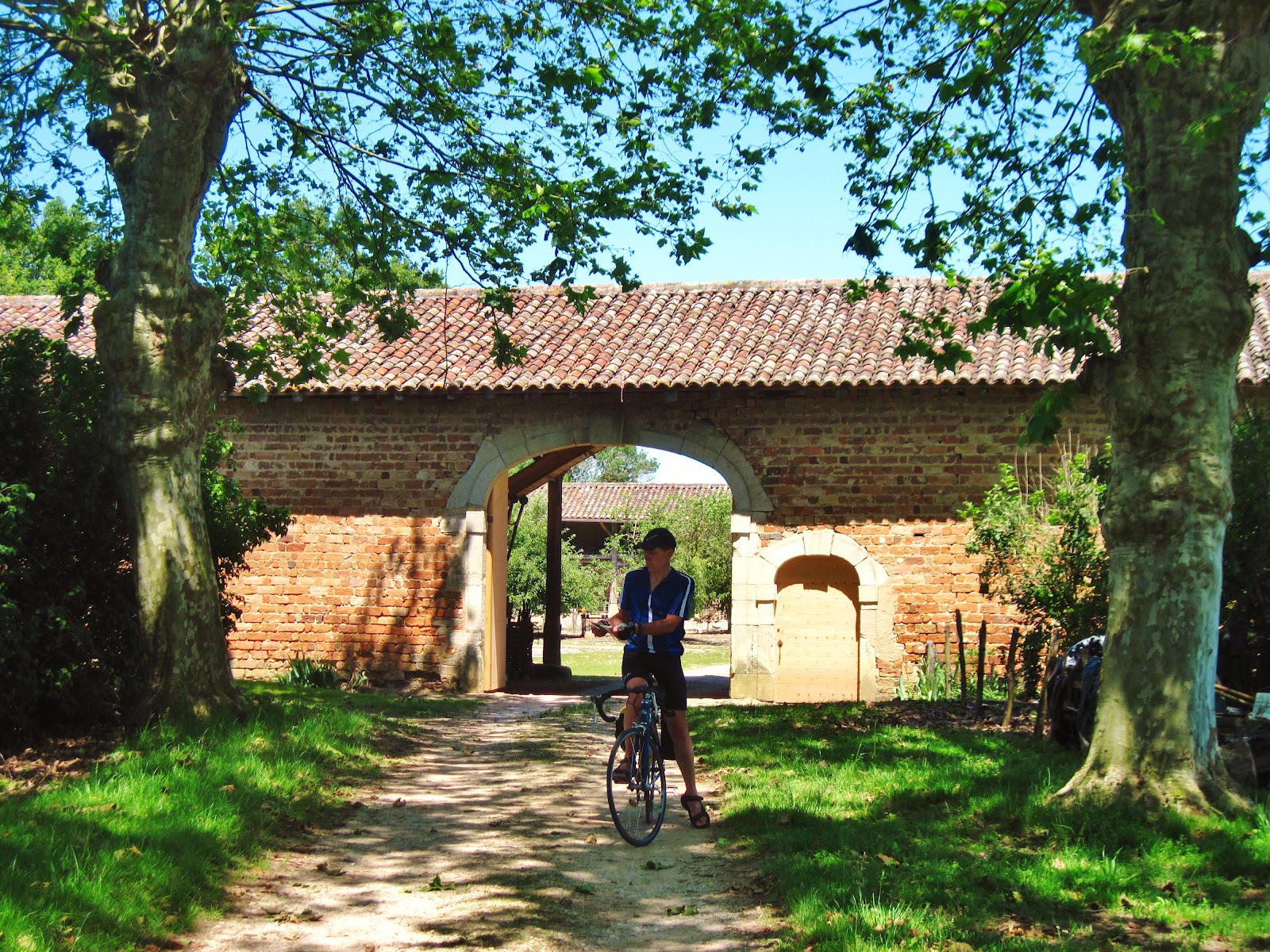
Along the banks of the river Soane, we followed the dyke; we still get a thrill from seeing working rivers in mainland Europe and the Soane had plenty of large freight barges, as well as smaller pleasure boats.  Navigation along the river was straightforward, compared to the winding lanes, but at every field boundary it was necessary to carry the bikes overhead to get through the narrow stiles.

This is a lovely area for a day or two of meandering cycling; there are a number of campsites around the town and Pont de Vaux itself has cafes, restaurants and a supermarket.  Having written about our awareness of our own mortality in the last post, we now find ourselves on a campsite that has the air of an outdoor old people’s home; it is populated with retired English and Dutch caravanners and looking around we feel we might live to one day be celebrating 50 and maybe even 60 years of marriage.

Thursday, 14 June 2012

Well tonight I'm gonna live for today


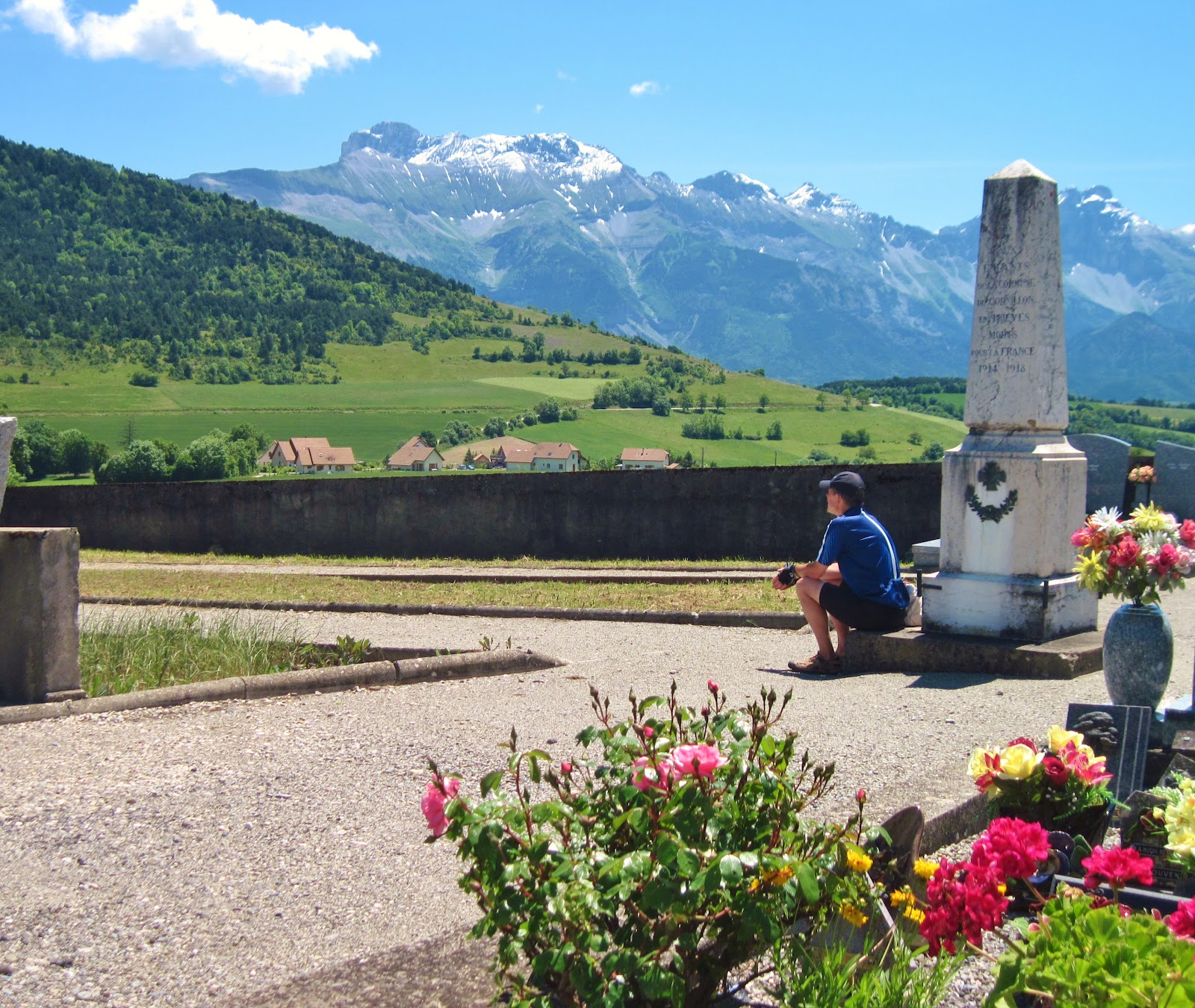
We cycled past a cemetery with a sign over the gate asking all who entered to be prepared to meet their maker, in French.  This seemed to sum up our days cycling by the River Drac, just south of Grenoble.

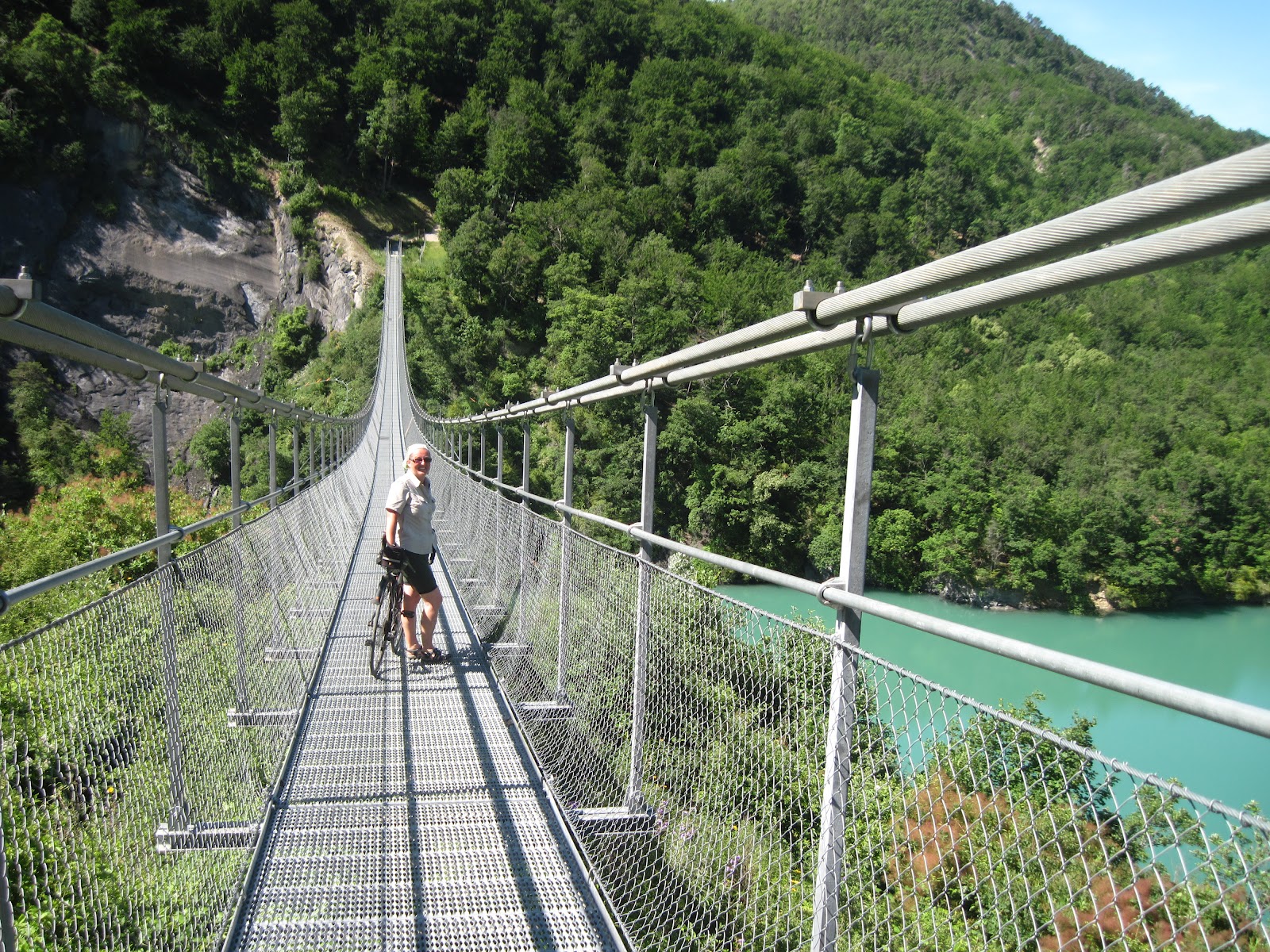
We had come to the campsite because it promised spectacular walking and cycling, including over the Passerelle du Drac, a 220m long suspension bridge high over the Drac River gorge.  We planned a cycle ride that included crossing the bridge, which proved to be a spectacular experience, particularly when, as we were half way across, the 40 strong French walking group behind us got on to the bridge and insisted on bouncing and running, so that the bridge swayed alarmingly; we were certainly glad to survive and return to firm ground.


After cycling through quiet French villages, woods and fields, we stopped for lunch in a small, remote cemetery.  These are often good places for a lunch break; in the van they usually have space for parking and we can stop and wander around the graves with a mug of tea; when cycling a cemetery is somewhere peaceful to sit and rest, there is always a grave or two for someone who died much too young and we can contemplate how every day we are alive is a gift we should make the most of.

Our cycle ride was only 30 kms, so should have been an easy day, but with 750m of ascent and temperatures of around 28C, we were barely functioning by the time we returned to the campsite.  Fortunately, tea and cool beer soon put the life back in us.

MMM pubished an article about our time in this area and our cycling trip in July 2013.  This link will take you to a pdf of the article if you want to read more.

He looks through his window, what does he see?


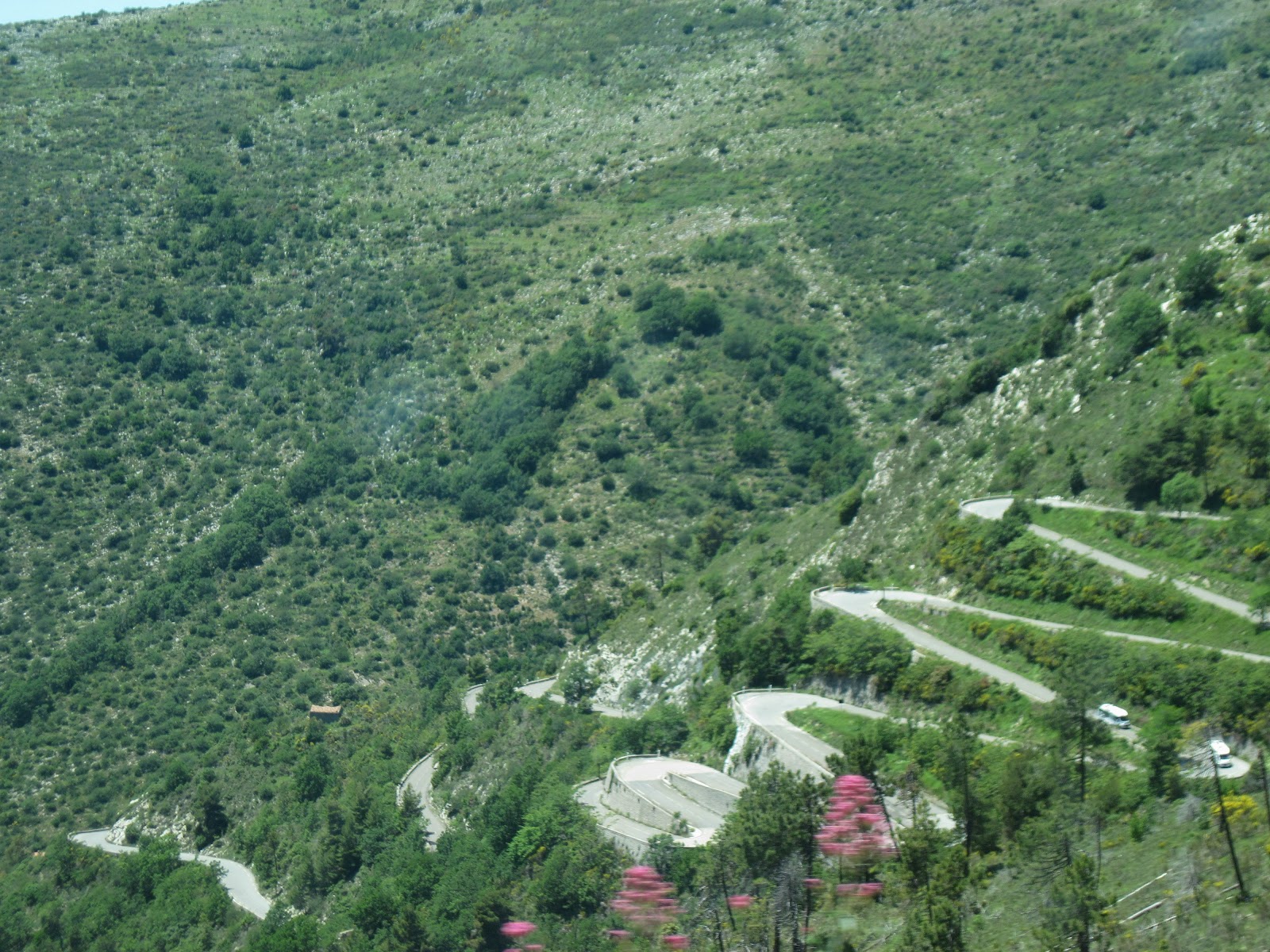
We have driven many kilometres over the last three weeks; of course, in the Blue Bus, ‘it’s not the destination, it’s the glory of the ride.’  Driving has given us an opportunity to consider the differences between the roads in the different countries we have travelled in and it seems to us that Italian hairpin bends are easier to swing around in a long wheel-base van, than French ones; we don’t know if it is physics, maths or engineering, but certainly the Italian’s have learnt a thing or two about building mountain roads and they are generally wonderful routes to follow.  We are also interested to see that despite the apparent European-wide recession, in Italy they continue to have a road building and road improvement programme.  As much as possible we used the main roads, rather than the Auto Strada, and we noticed new by-passes still being built around a number of small towns, keeping the road building industry in work, something not a current activity in England.


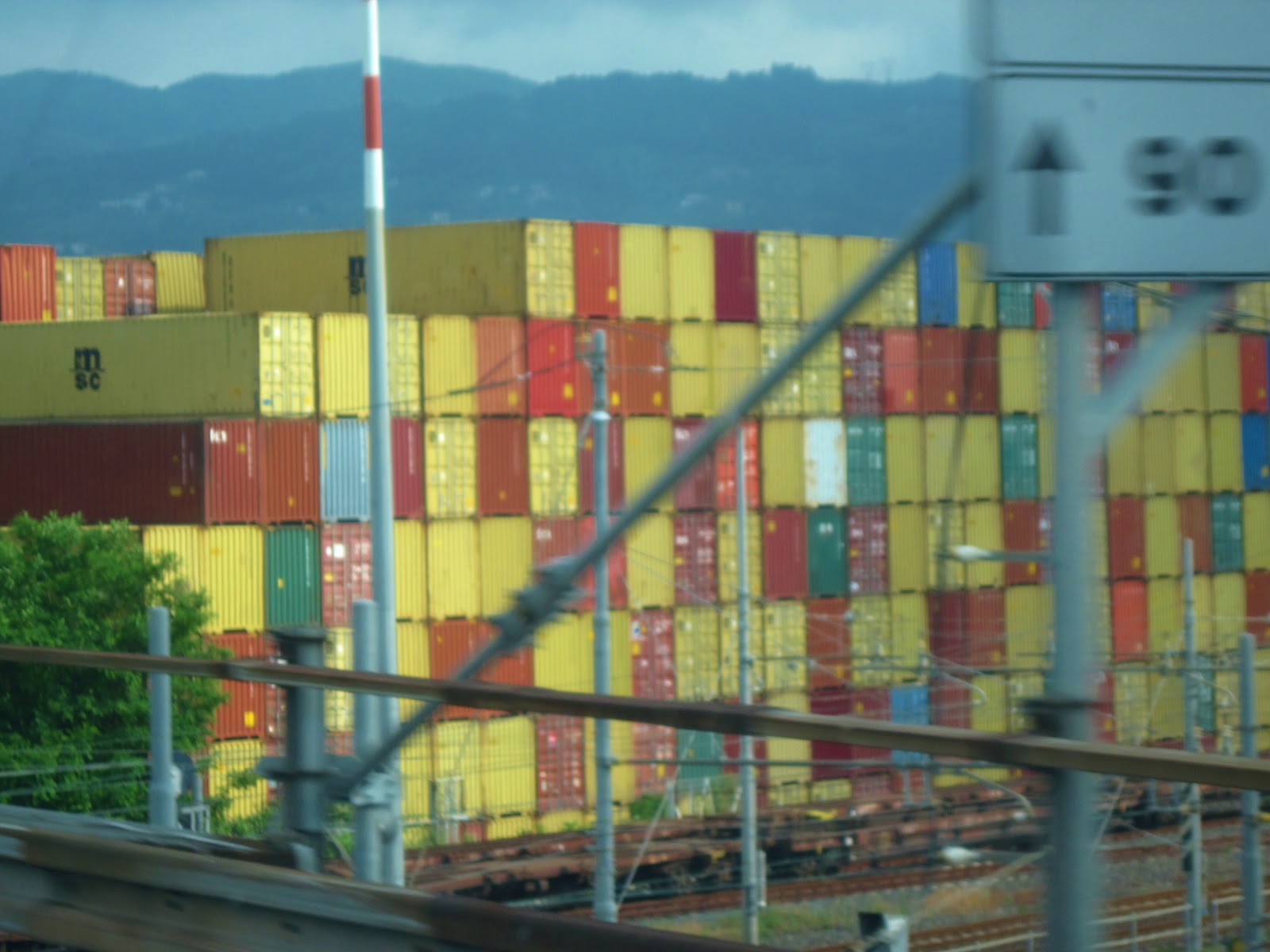
We have been taking photographs from the passenger seat of the Blue Bus as we move from campsite to campsite, this creates some odd looking photographs, but some of them are interesting, showing the differences in landscape we have passed through.  We are not only interested in the tourist itinerary, the local industry and agriculture is also absorbing.  Travelling north from Entrevaux to Gap in France we came through an area of intensive fruit growing, further north the farmed landscape changed to a  more pastoral one and we once again saw sheep and cows in the fields and farms selling home-made cheeses.


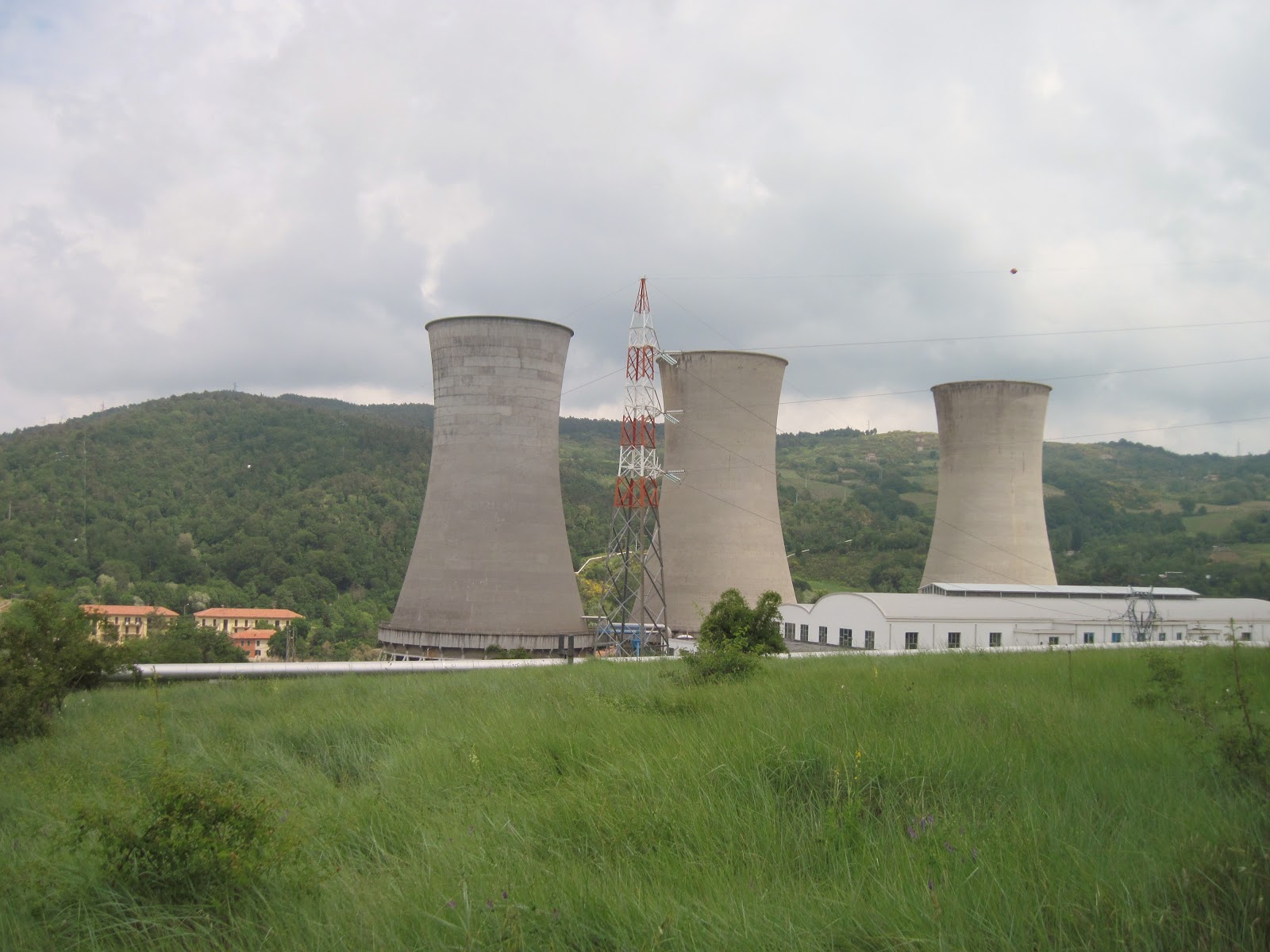
The scale of the marble quarrying and shipping was fascinating as we drove along the Italian coast around Massa.  Another area that attracted our curiosity was on the road between Orbetello and Volterra in Tuscany, where the geothermal energy is utilised to run power stations; for a few kilometres the smell of sulphur fills the air, pipelines roam up and down the hilly Tuscan landscape and large cooling towers dominate the landscape, until you are once again in the typical Tuscan scenery of vines and cedar trees.

Tuesday, 12 June 2012

Where were you while we were getting high?


Entracque, in the Italian Maritime Alps, is at around 900m and so still gets a bit chilly in the evenings and mornings and there is still snow on the mountains.  However, during the day it is over 20C and sunny, so we can’t really understand why early June is considered out of season and all the restaurants are closed and the campsites virtually empty.

This lack of other tourists does mean that we have the footpaths mostly to ourselves, although the roads are busy with the Italian cyclists practicing for mountain stages up and down the hairpin bends.

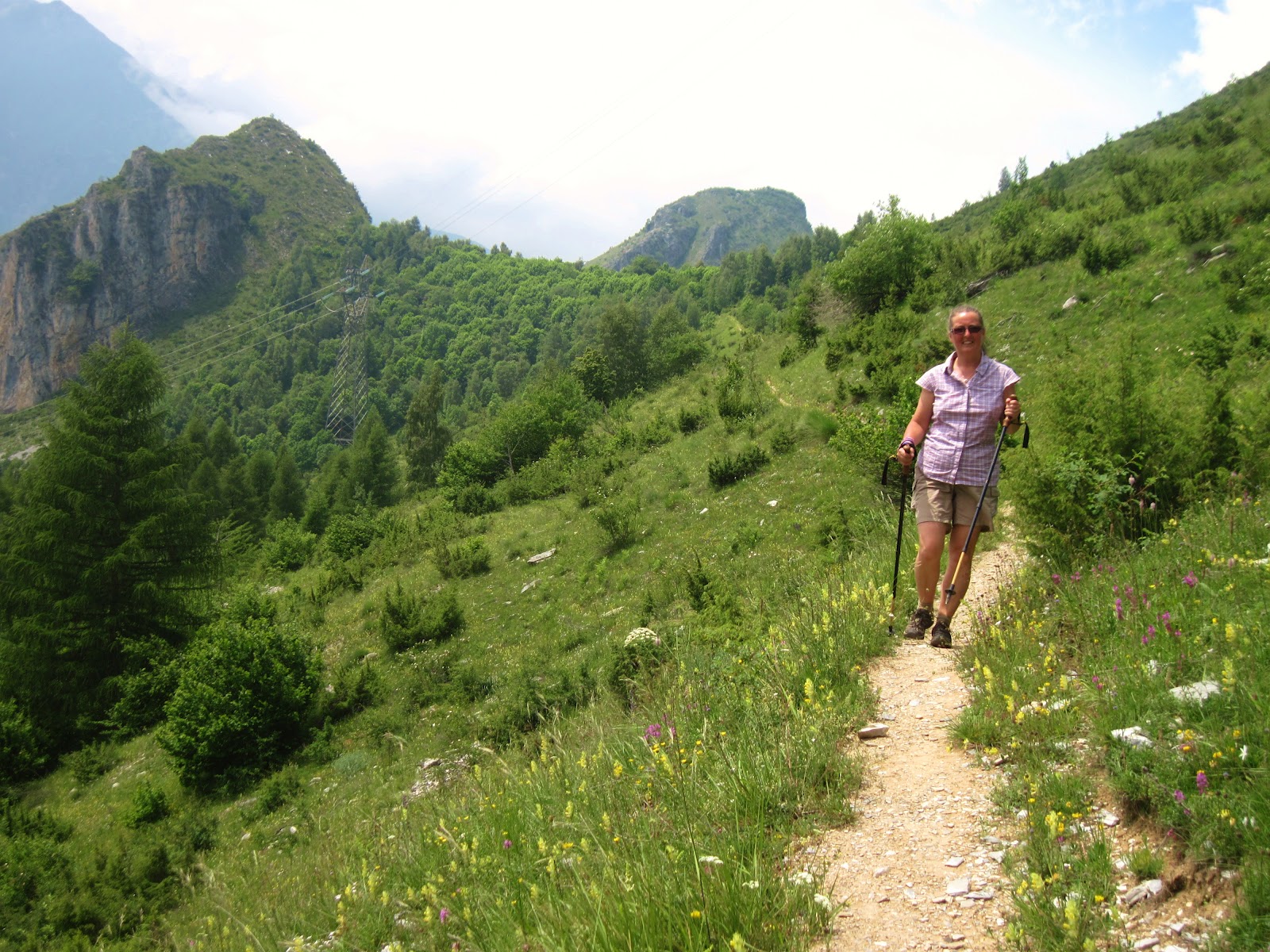
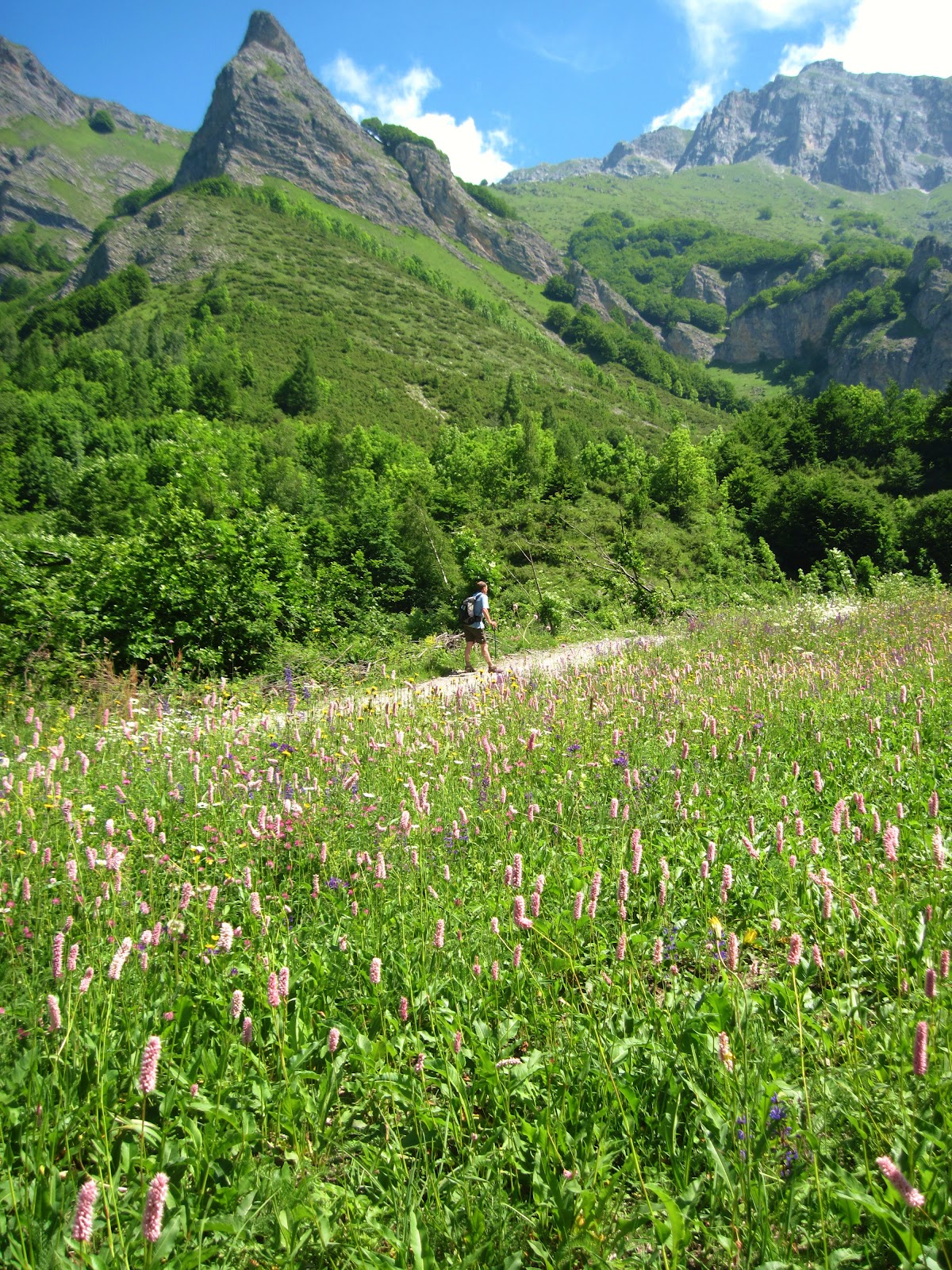
The walking around Entracque is delightful and we have had two good days walking in the mountains, in cool woodland, above picturesque mountain villages, through sunny meadows and under pink coloured cliffs and always surrounded by wild flowers, numerous butterflies and countless insects.   The diversity of the plant and insect life is striking; we have seen varieties of orchids, including fly orchids, saxifrages, geraniums, mints and juniper, to list just a few of the plants; Swallow Tail, Apollo, Orange Tip and plenty of other butterflies we don’t know the name for; alders, hazel, walnut, larch, laburnum, beech, birch and other trees we have failed to notice.  This richness of nature takes our breath away, nourishes our wellbeing and makes us wish that the UK had even half this diversity and abundance.   The only disappointment is the limited number of birds we have seen;  Jays are everywhere, but we can see these in Manchester, we have enjoyed hearing the distinctive sound of Cuckoos every day and near Entracque we watched two Black Kites gliding above us.

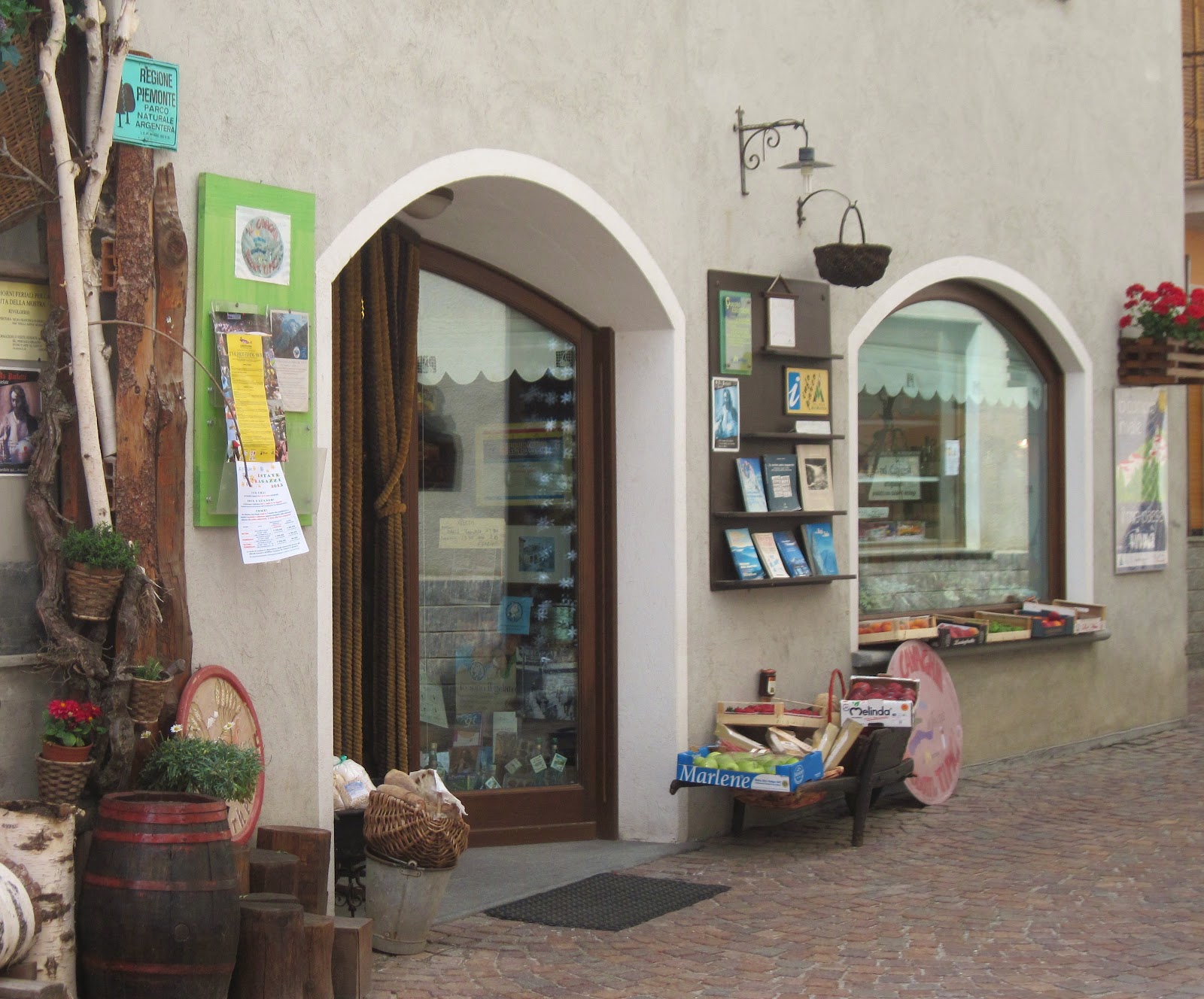
Entracque is a pretty village with a range of medieval fountains, a cafĂ© and a few grocery shops; our favourite deli and bakery is run by the friendliest of women, who talks to us in a mixture of Italian, French and English and tells us the origins of the cheese, bread and biscuits we can’t resist buying.

Friday, 8 June 2012

Me, I'm just a lawnmower


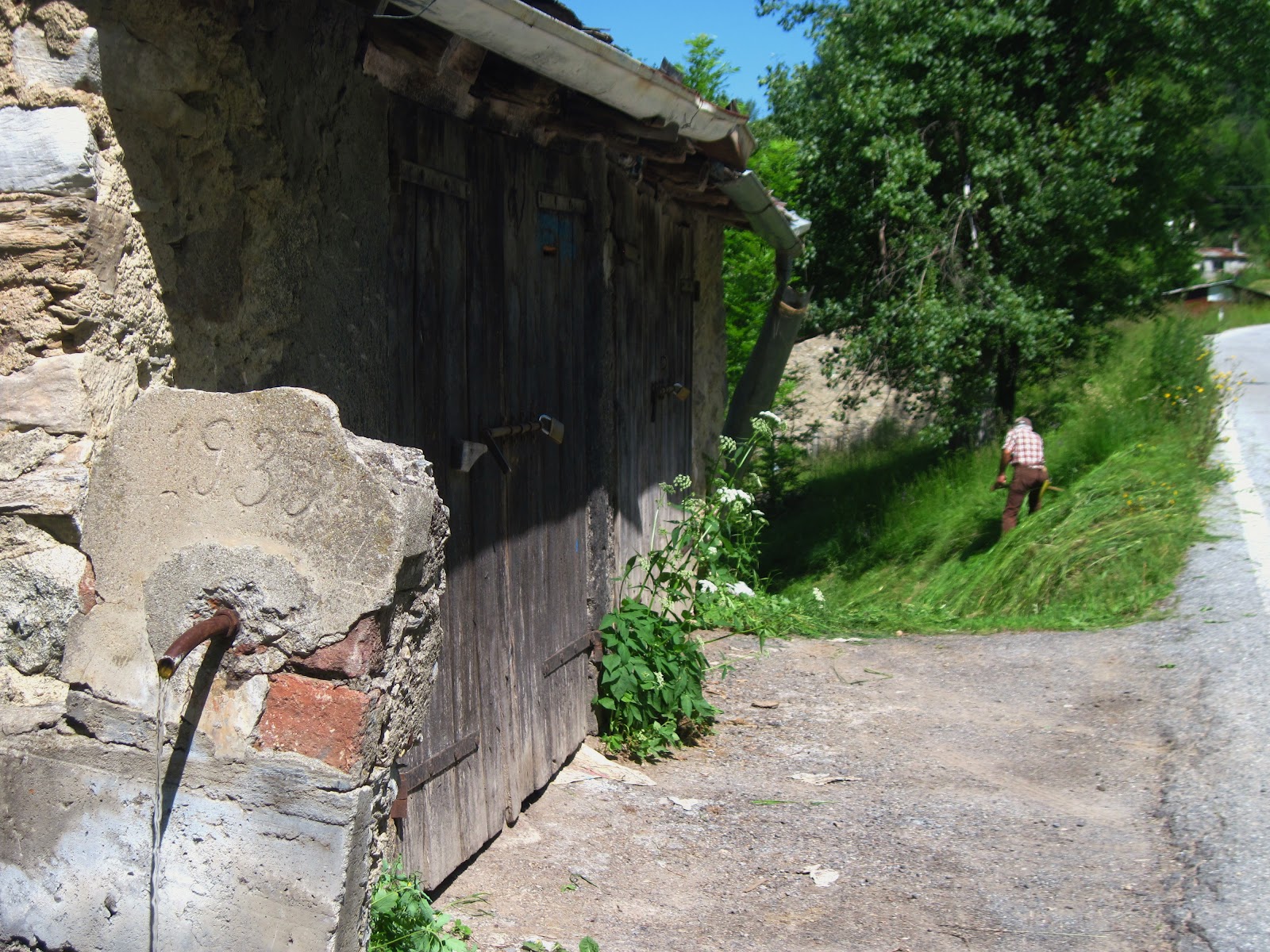
Over the last ten days that we have been in Italy, we have noticed that a regular sound and sight on Italian campsites has been strimming.  This activity will usually start around 8.30 and except for a lunch break, continue through the day.  It is always carried out by men; strimming has yet to become an activity appropriated by women in Italy.  The strimming equipment used is generally an industrial scale strimmer, rather than the lightweight Black and Decker ones you can get for your garden in the UK, these Italian strimmers are petrol driven and heavy.  The strimmee will be sporting a boiler suit and maybe some fluorescent items of clothing, although the latter do not appear to be obligatory.  We can only assume that the stony and undulating Italian land calls for more strimming on its campsites than other countries.
Of course, in the mountain villages you will still see farmers using scythes, as the man in the photograph is doing.  You might think that we have only posted on this subject so that we can use this particular lyric; you could be right.

We're gonna bring a case of wine, Hey, let's go mess and fool around, you know, like we used to


We could never hope to have the dedication to wine that our French camping neighbours at the campsite near Barola have.  They were out all yesterday, only returning briefly for a freshen up, before leaving again for the evening; and this morning they left the campsite before 09.00, after moving the nine cases of wine from their car boot into their tent.  In comparison, we are not even trying, buying just two bottles of local wine at the Cantina Comunale in La Morra.


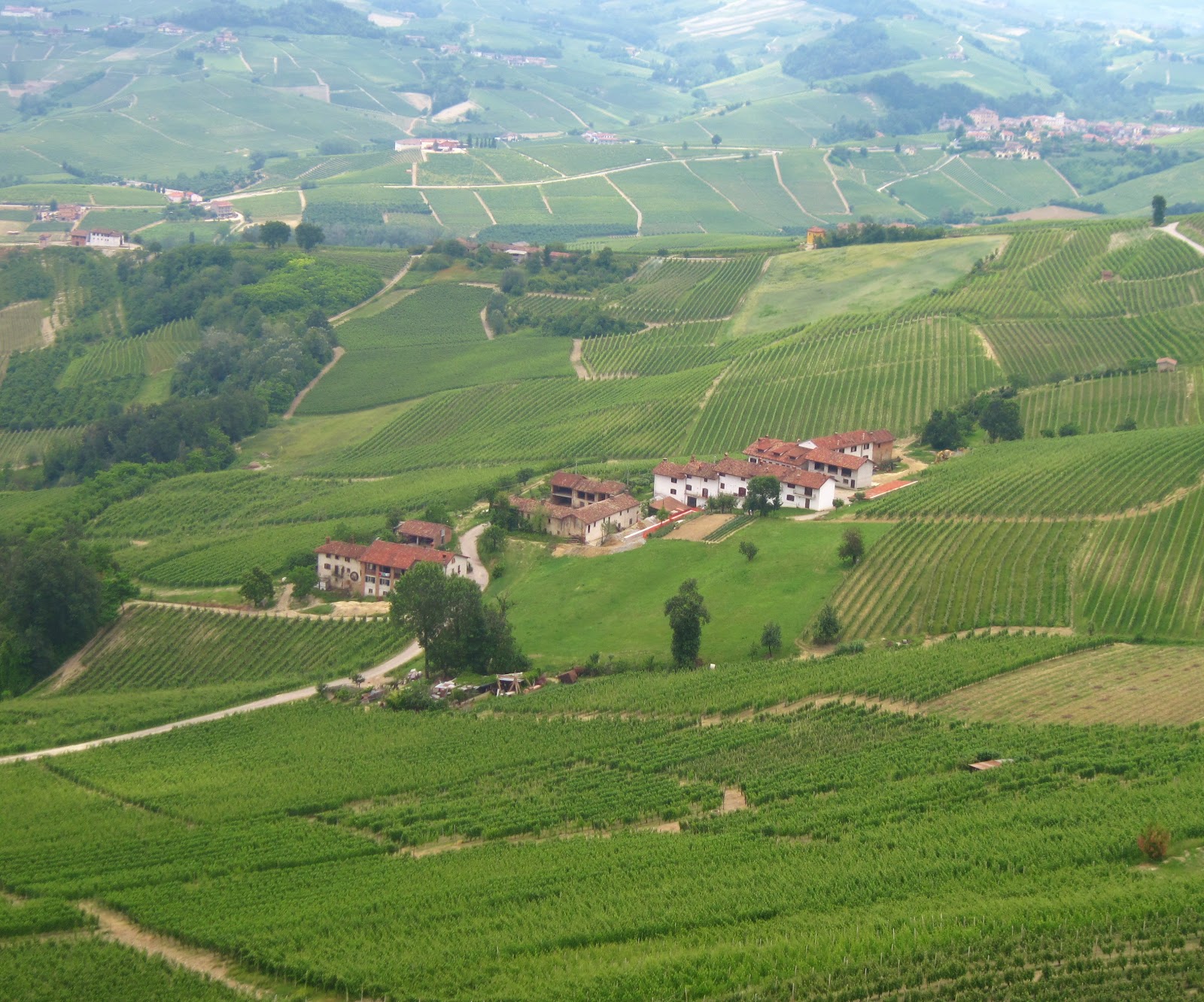
We have travelled through a number of different wine regions since leaving Zeebrugge, including the Alsace region of France, Tuscany, where we bough Chianti and some excellent Montalicino and we are now in Barola in Piemonte, an area whose agriculture is dedicated to two crops, vines and hazelnuts (the latter we can only assume is to keep Italy in Nutella).


Camping Sole Langhe will rate as one of our favourite campsites; it is small, well maintained and friendly with clean facilities.  Having purchased a map in a well stocked book shop in Alba, we were ready to explore and set off, some time after our French neighbours, on a day of walking.  Striding out among the vines and hazel bushes is very agreeable; occasionally we would greet someone working, but generally we had the footpaths to ourselves.  Our route finding was going very well until we found ourselves on a rarely used track heading down to the river; we persevered through the bushes and brambles, wishing we had taken the long trousers option.   Carol’s legs were soon scratched and bleeding and then the track, such as it was, ended at a wall of trees and undergrowth.  As we retreated back up the hill, we discussed the Italian map’s caveat that it accepted no responsibility for its accuracy.

Wednesday, 6 June 2012

Gee it must be great riding with him


 We have chosen to drive on peaceful country roads through Tuscany, following the hills up and down, negotiating hairpin bends and meandering through hill-top villages and towns.  On these routes we always see cyclists; these are generally on their own or in pairs, in team lycra and are seemingly tackling the ups and downs with hardly a bead of perspiration.  Going down some of the hills they can move faster than the Blue Bus around the corners and this is fine.  However, having a cyclist on your rear bumper is one thing, what is heart-stopping is when we are going up the hill and a cyclist is riding down and taking the racing line round a blind bend; we see him correct his path and seem to skip to the right.  We hate to think the mess Italian lycra would make of the van’s bumpers.


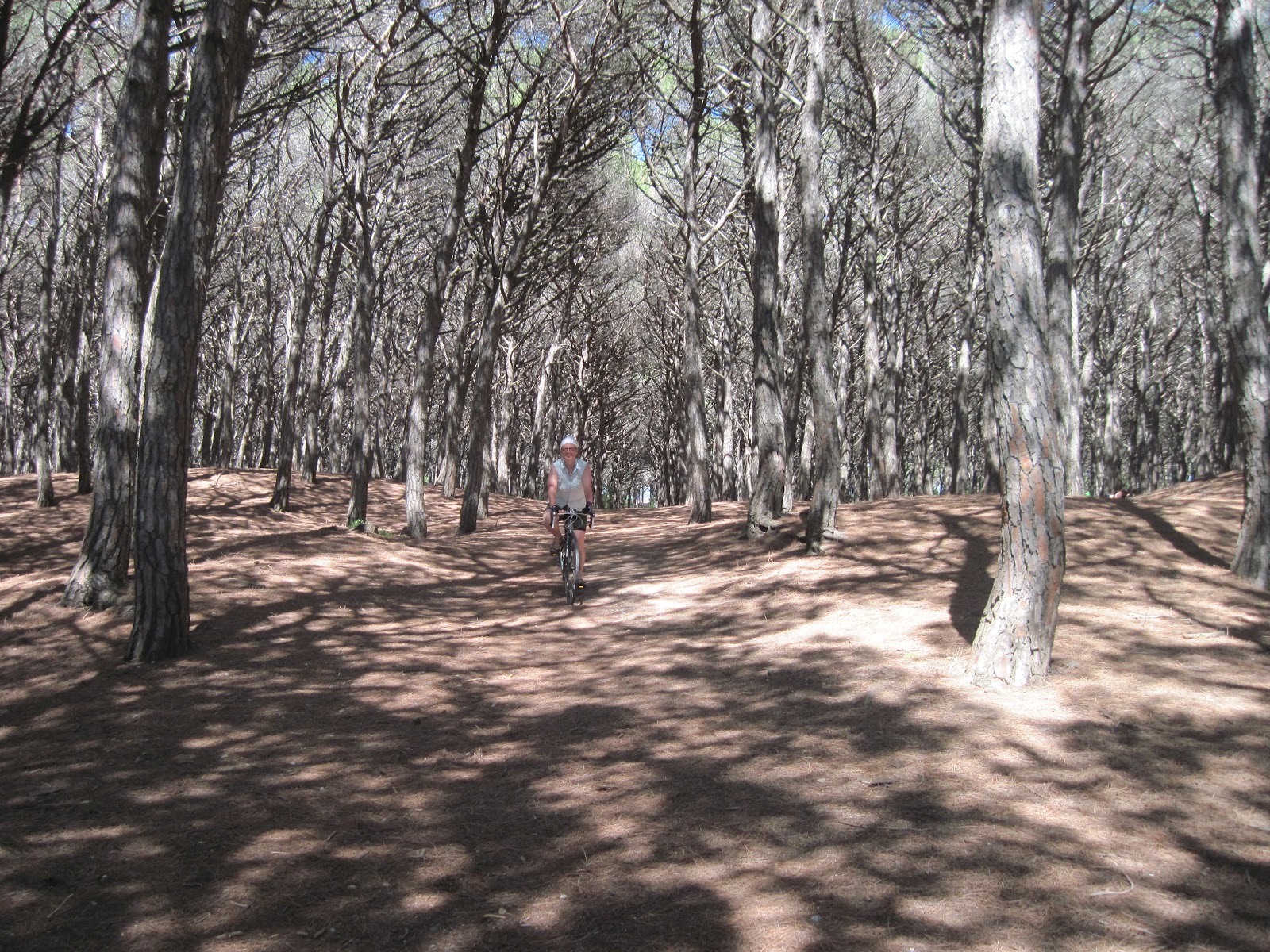
At the well run and peacefully located Camping Vale Gaia near Cecina, they had a folder full of cycling routes from the campsite and we browsed through these to find something suitable for a day out.  Most of the routes were around 80 – 100 kms, which on the ups and downs of Tuscany is more than Carol certainly wanted to tackle.  We felt like a pair of English wimps choosing the 40 kms route, but had a good few hours cycling and managed to sample more Italian ice cream on the way and fit in a paddle in the Med. 


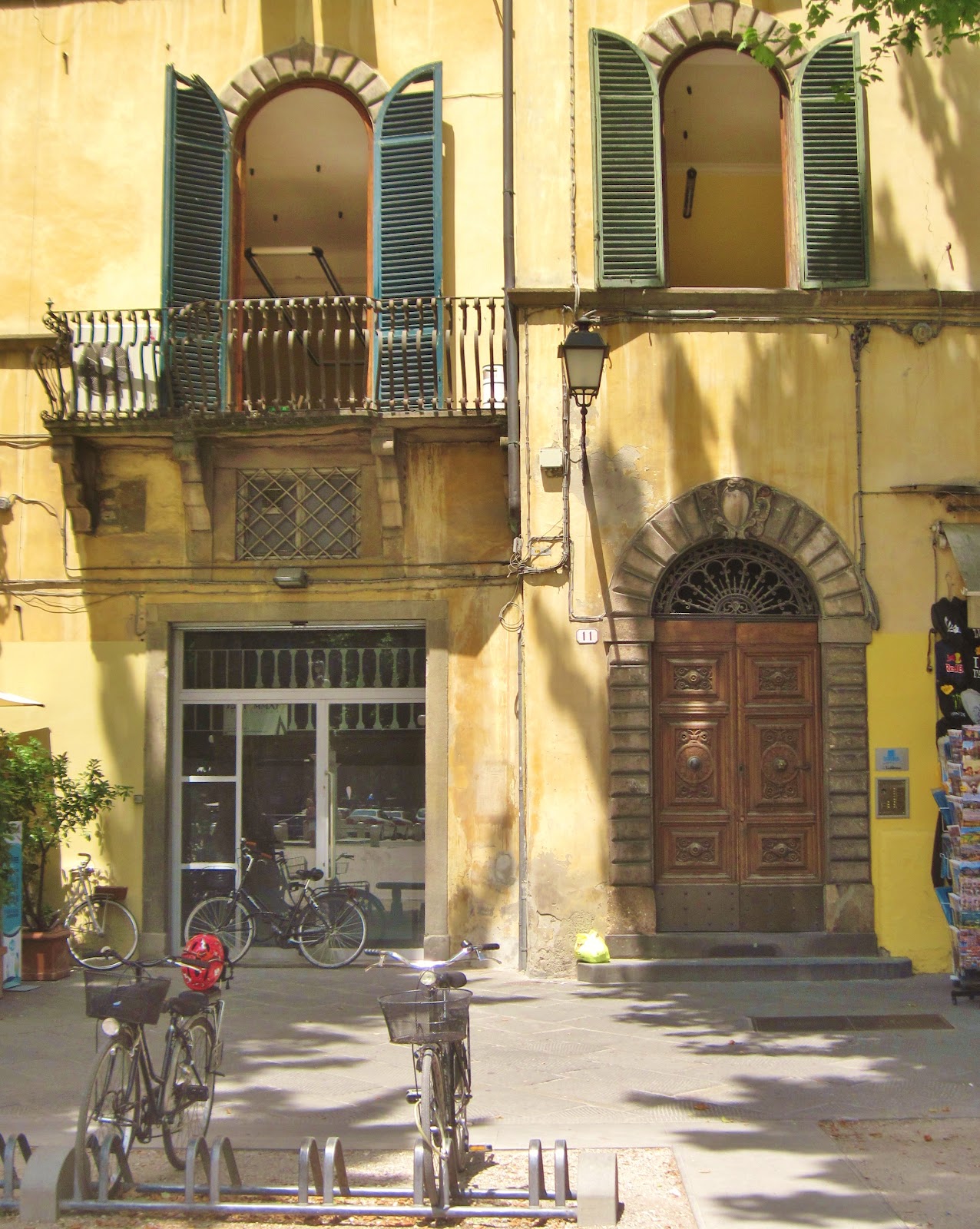
On our way north we had a short stop in Lucca, a handsome walled city between Firenze and Pisa and a cyclist’s heaven.  Most of the narrow city streets are traffic free and on top of the walls is a tree-lined traffic free road and footpath.