CONTACT US

We want to hear from you; get in touch by leaving a comment on one of our posts or by using the contact me button.

Wednesday, 24 March 2010

With a little help from (our) friends


As we have mentioned previously, Anthony’s ex-colleagues at the University of Central Lancashire kindly gave him a wad of euros as a leaving gift which we have been spending over the past 11 months; treating ourselves to a meal out every month or so. In Porto, we had our ninth and last meal out on the staff and it was a memorable one.

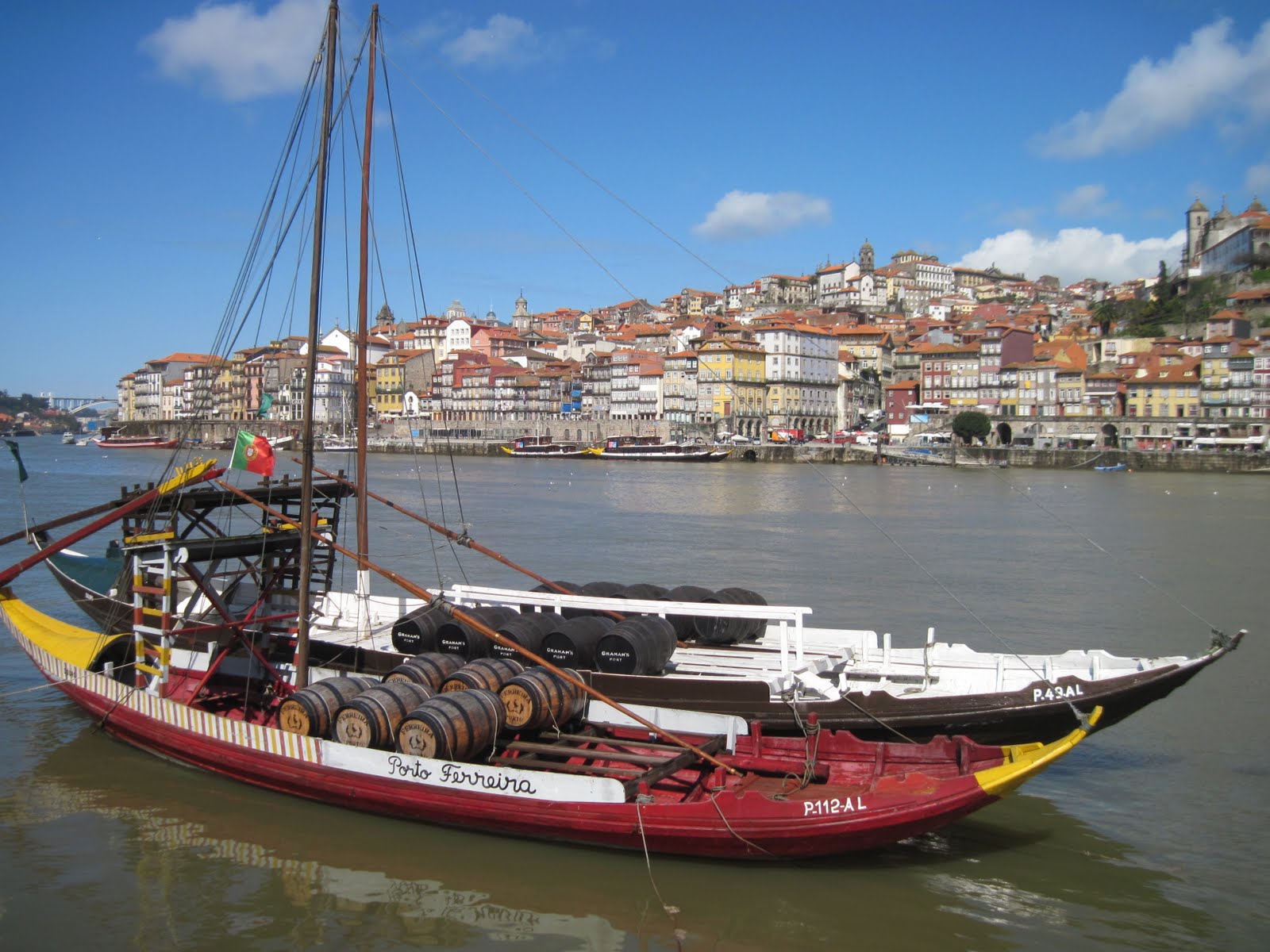
Porto is a magnificent city; set on the sunny, south facing steep banks of the River Douro, it cannot help but be picturesque. On the cooler, north facing bank is a separate city, Vila Nova de Gaia; joined by some spectacular bridges, the two have a Newcastle: Gateshead relationship. Vila Nova de Gaia is the city where all the Port wine is produced by one of the many caves or cellars; Porto just got the name.

Porto is the more picturesque of the two cities, with tall, colourful houses around narrow cobbled streets; it is best seen from Vila Nova de Gaia, or from a boat cruise on the Douro. We chose Taylor’s for our Port wine tour and tasting as it has impressive views over the river to Porto. We arrived at lunch time and having walked up the steep hill, we were pleased to find that the restaurant menu had not just vegetarian options, but vegan main meals. The Taylor’s Restaurant is very posh; silver service from attentive waiting staff, heavy white fabric napkins and a panoramic view. It is, of course, accustomed to tourists and they didn’t bat an eye-lid at two scruffy travellers, although all the other guests were in very smart attire. We had an excellent meal and toasted the University staff with an aperitif glass of dry, white Port, called Chip Dry.

Back at the camp site we watched other campers returning from their own trips to taste the local nectar; laden with bags from Cockburn, Croft, Sandeman and others.
Tuesday, 23 March 2010

Don't make me go home


The day we get on the ferry back to the UK is getting closer; although we are not negative about coming home, the very best thing about the past year has been the freedom to do as we please, without having to go to work and it is hard to feel positive about returning to being a wage slave once more. Although we are not sure we will ever get the opportunity to have a full year travelling again, we have started to think about how our future can include long trips with the Blue Bus.

We are looking forward to seeing everyone we know back at home and stuffing our faces with crumpets, chip butties and Theakston’s Old Peculiar at our first opportunity, while reading the Guardian. However, at the moment we are getting wistful thinking about the things we will miss about camping in mainland Europe. This list includes:

Fantastic bread – only the UK is obsessed with sliced white loaves
Quiet roads and motorways with no traffic jams
Meeting new people
Sitting outside in cafes drinking good coffee and watching the world go by
Cheap and good red wine
Small, spicy green peppers
Tins of tiny green lentils
Star-gazing on camp sites
Seeing new places and exploring
Warm sun
Sleeping in the van
Having the time to bird watch, look at flowers and generally enjoy the natural environment
Sweet, juicy oranges

The photographs are from Praia de Mira, a resort that does not have a lot of charm, with the exception of the blue and white wooden church; inside this has a mixture of religious and fishing icons. The beach at Praia de Mira stretches on and on; the fishing folk were on the beach messing with nets, boats and tractors.

Saturday, 20 March 2010

Oh Man, I need TV when I got TRex


We didn’t know much about Portugal before we came; we hadn’t found a book written by an ex-pat journalist or academic who had moved here for the good life and was keen to publish his thoughts on the ups and downs of life in this country on the edge of Europe. Consequently, Portugal keeps surprising us and often enchants us.

We have found out for ourselves that the Portuguese feel that the Spanish treat them as backward neighbours, they learn French and English at school, the country does not close down for three hours for siesta and people eat at what the British would consider reasonable hours. The Portuguese tile everything and prefer to build new houses, rather than live in a rustic cottage, all supermarkets smell like fishmongers, due to the amount of salt cod on sale, every café and restaurant has a TV switched on constantly, even if you go out for a meal in the evening.

This lack of fore-knowledge also means that we find tourist sights that were not on the must-see list. The dinosaur footprints near Tomar are an amazing treat, not even covered in our Church-obsessed Rough Guide. The Sauropod footprints are the oldest in the world and the best example; there are a number of tracks of different animals and you can clearly see the prints of their large back feet and smaller front feet. We paid two Euros each for the privilege of visiting the limestone quarry where these footprints were found in 1994; visitors are trusted to walk close to the tracks without damaging them, giving you an opportunity to have a good look. To see something so rare, made 175 million years ago and found by chance is an experience we will never forget. We don’t regret by-passing Rome, but overlooking these footprints would have been to miss an awesome experience that puts the present in to context and that we will never forget.

By the fountain down the road


Water features are everywhere in Portugal; decorative fountains in the towns and in the middle of roundabouts and features to provide water to homes and industry. Facing the Atlantic, water is not as scarce as it is in much of Spain, but it is still clearly a managed resource; the newspaper has a list of reservoirs and what capacity they are at every day. These reservoirs, or Barragems, are dotted around the hilly areas of Portugal; many of these are vast lakes, spectacular country roads cross them and hug their shores and they are widely used for water sports and fishing.

In the villages you can still see water features from the time when there was no running water in people’s homes; most villages still have communal taps with tiled surrounds or village pumps, Carol is getting some exercise turning the mechanism for the pump in a village near Poco Redondo. In the fields mechanical water pumps for agriculture are disused and rusting; on walks we pass old wells with no fencing around them just waiting for someone to fall in and the remains of old water wheels can be spotted. Towns often have a large water tower, sometimes colourfully decorated; the water tower in Poco Redondo was painted pastel pink.

Evora and Serpa both had a fine aqueducts and the Convento de Cristo in Tomar, the HQ for the Knights Templar, has a 7 km long aqueduct built in the 17th Century to provide water to the Convento. This impressive monument is built high above the valley and, typically for all of main-land Europe, you can walk along it without the benefit of a hand-rail.

Wednesday, 17 March 2010

And all the roads we have to walk along are winding


There are positive and negative aspects to walking and hiking in much of southern Europe; on the positive side we are getting used to not worrying about trespassing, in most countries we have had the freedom to roam and with the hunting season now over, we no longer have to worry about being mistaken for a Wild Boar. However, it is often impossible to find a map in a suitable scale for walking and we are often reliant on way-marked paths and tracks.

We are now in the wealthier and more populated part of Portugal, north of the river Tejo and staying on an idyllic site near Tomar; we are the only campers and we can breakfast in the sun with the site's donkeys, horse and sheep, called Olivia, for company. The site owners are from the Netherlands and the UK and understand that we northern Europeans like to get out for a walk; they have produced directions for three local walks and have managed to get hold of the military maps for the area from the Geological Museum in Lisbon.

The walking is mainly on un-made roads and tracks, the routes wind through Eucalyptus plantations, Olive trees, small fields of vines and along streams, occasionally crossing tarmac roads and taking us into a village for a cafe stop. The Almond blossom is following us north and the Mimosa trees are in full bloom, underneath the Eucalyptus both pink and white heather are flowering. After the rain the streams are gushing and we enjoyed the chance to paddle across one stream to continue the route, drying our feet in the sun.

Monday, 15 March 2010

Stay out drinkin' 'till the morning comes

To celebrate Anthony’s birthday Lynn and John, with the help of two Portuguese friends, Luiz and Fernando, organised a meal out at the Italian restaurant in Castelo Branco.

We had a fun and very convivial Portuguese evening; all first meeting in Silveira and opening a few bottles of red while we waited for Fernando to drive over. Consequently we reached the restaurant already very jolly at 21.30, as other diners were leaving. At the end of the meal Luiz ordered Beirao, a popular Portuguese liqueur, and we toasted the staff, a Portuguese tradition we were told, and wished Anthony a very long life. A Tiramusu birthday cake with candles was produced and everyone sang. As we left the restaurant the staff had their coats on to go home, but our new Portuguese friends considered the night young and we were taken to the nearby Rock Café; a dark cellar full of loud rock music with young and older music fans, sitting at tables on plastic chairs, enjoying the sounds. We tumbled in to bed tired and slightly giddy in the early hours after a birthday to remember

Lots of rural charm in the country


Lynn and John live in Silveira, a hamlet on the northern banks of the River Tejo, with their beautiful cat Jagger. As well as their own house, they have two cottages they let as holiday rentals for the perfect, away-from-it-all retreat. Hopefully the photographs of the area do justice to the rural charm of this area. You can find more details and book your own trip to this beautiful part of Portugal on the Owners Direct website, property reference P6367.

Kayt and Zohra flew over from the UK to join us for a long weekend and Lynn and John were faultless hosts, taking us all for walks and trips locally; we met other villagers as they were out working in the sunshine, we spotted a Short-toed Eagle and a tiny snake, we walked through olive trees and past rushing streams, we admired the village bread ovens and covered well, we stood on a high crag above the river watching the Griffon Vultures circle below us. In the evenings we shared the cooking, drank Portuguese red wine and brandy, caught up on all the news and gossip and enjoyed plenty of laughing.

We had a day trip to Marvao, a walled hill town with charming houses and a warren of a castle perched at one end, a magnificent spot with panoramic views over fields and villages to every side. The day also provided another fantastic Portuguese café experience; Zohra and Kayt had to be dragged out of the cake shop salivating after purchasing only a small selection of the delicious, sweet Portuguese cakes.